Thursday, December 6, 2012

Voyager Interstellar Mission


The Voyager program is an American scientific program that launched two unmanned space missions, the probes Voyager 1 and Voyager 2. These were launched in 1977 to take advantage of a favorable alignment of the planets during the late 1970s. Of all the NASA missions, none has visited as many planets, rings, and satellites, nor has provided as many fresh insights into the outer planets, as Voyager.Although they were designated officially to study just the planetary systems of Jupiter and Saturn, the space probes were able to continue their mission into the outer solar system, and they are expected to push through the heliosheath in deep space.Voyager is planetary exploration on a grand scale.

First conceived as a "Grand Tour" of the solar system from Jupiter to Pluto, then scaled back to a more modest mission called Mariner Jupiter-Saturn until its incarnation on the eve of launch as Voyager, the mission has been, and will remain well into the future, NASA's biggest planetary expedition. The two Voyagers have explored more planets (four), have discovered more moons (22), and have returned more photographic images, than any other space flight. The original price tag of nearly a billion dollars made it the second most expensive planetary voyage, exceeded only by Viking, which landed on Mars in 1976.Each Voyager spacecraft weighed more than any Surveyor or Ranger sent to the Moon and more than any Mariner or Pioneer probe (except for Pioneer Venus), though less than the combined weight of the Viking lander and orbiter.

The twin Voyager 1 and 2 spacecraft continue exploring where nothing from Earth has flown before. In the 34th year after their 1977 launches, they each are much farther away from Earth and the Sun than Pluto. Voyager 1 and 2 are now in the "Heliosheath" - the outermost layer of the heliosphere where the solar wind is slowed by the pressure of interstellar gas. Both spacecraft are still sending scientific information about their surroundings through the Deep Space Network (DSN) .


The primary mission was the exploration of Jupiter and Saturn. After making a string of discoveries there -- such as active volcanoes on Jupiter's moon Io and intricacies of Saturn's rings -- the mission was extended. Voyager 2 went on to explore Uranus and Neptune, and is still the only spacecraft to have visited those outer planets. The adventurers' current mission, the Voyager Interstellar Mission (VIM), will explore the outermost edge of the Sun's domain. And beyond.

As of 2012, Voyager 1 is the farthest manmade object that has ever been sent from the Earth. On 15 June 2012, scientists at NASA reported that Voyager 1 might be very close to entering interstellar space and becoming the first manmade object to leave the Solar System.

Both of these scientific missions into outer space have gathered large amounts of data about the gas giants of the solar system, and their orbiting satellites, about which little had been previously known. In addition, the trajectories of the two spacecraft have been used to place limits on the existence of any hypothetical trans-Neptunian planets.

Of the two space probes of the Voyager Program, Voyager 2 was launched first. Its trajectory was designed to take advantage of an unusual alignment of the planets (that occurs once every 177 years) that allowed one space probe to fly by Jupiter, Saturn, Uranus, and Neptune, if everything went well. Of course, in case of a serious malfunction, such as in all of the space probe's radio transmitters or receivers, then that would have been the end of the long mission (to four planets), since there was not a second space probe to fill the gap. That was the gamble that NASA and the JPL were forced to take.

During the 1990s, Voyager 1 overtook the slower deep-space probes Pioneer 10 and Pioneer 11 to become the most distant manmade object from Earth, a record that it will keep for the foreseeable future. Even the faster (at its launch) New Horizons space probe will not pass it, since the final speed of New Horizons (after maneuvering within the solar system) will be less than the current speed of Voyager 1.


Voyager 1 and Pioneer 10 are the most widely separated man-made objects anywhere, since they are traveling in roughly opposite directions from the Solar System.

Periodic contact has been maintained with Voyager 1 and Voyager 2 to monitor conditions in the outer expanses of the Solar System. The radioactive power sources of both spacecraft were still producing significant amounts of electric power as of 2012, keeping them operational, and it is hoped that this will allow the heliopause of the Solar System to be located and investigated.

On June 10, 2011, scientists studying the Voyager data noticed what may be giant magnetic bubbles located in the heliosphere, the region of our solar system that separates us from the violent solar winds of interstellar space. The bubbles, scientists theorize, form when the magnetic field of the Sun becomes warped at the edge of our Solar System.


The Voyager primary mission was completed in 1989, with the close flyby of Neptune by Voyager 2. The Voyager Interstellar Mission (VIM) is a mission extension, which began when the two spacecraft had already been in flight for over 12 years.Both spacecraft also have adequate electrical power and attitude control propellant to continue operating until around 2025, after which there may not be available electrical power to support science instrument operation. At that time, science data return and spacecraft operations will cease.

Both Voyagers are headed towards the outer boundary of the solar system in search of the heliopause, the region where the Sun's influence wanes and the beginning of interstellar space can be sensed. The heliopause has never been reached by any spacecraft; the Voyagers may be the first to pass through this region, which is thought to exist somewhere from 8 to 14 billion miles from the Sun. This is where the million-mile-per-hour solar winds slows to about 250,000 miles per hour—the first indication that the wind is nearing the heliopause. The Voyagers should cross the heliopause 10 to 20 years after reaching the termination shock. The Voyagers have enough electrical power and thruster fuel to operate at least until 2020. By that time, Voyager 1 will be 12.4 billion miles (19.9 billion KM) from the Sun and Voyager 2 will be 10.5 billion miles (16.9 billion KM) away. Eventually, the Voyagers will pass other stars. In about 40,000 years, Voyager 1 will drift within 1.6 light years (9.3 trillion miles) of AC+79 3888, a star in the constellation of Camelopardalis. In some 296,000 years, Voyager 2 will pass 4.3 light years (25 trillion miles) from Sirius, the brightest star in the sky . The Voyagers are destined—perhaps eternally—to wander the Milky Way.

Current Status :

On December 3, 2012, NASA scientists announced that Voyager 1 had discovered a previously unknown region of the heliosphere. Described as a "magnetic highway," here the pressure of the interstellar medium sweeps back the Sun’s magnetic field and with it many of the slower moving particles emerging from within the solar system. These are mixed with faster moving particles entering the solar system from the interstellar medium. The magnetic field in this newly discovered region is 10 times more intense than Voyager 1 encountered before the termination shock. It is expected to be the last barrier before the spacecraft exits the solar system completely and enters interstellar space.

On November 7, 2012, Voyager 2 reached 100 AU, making it the third human made object to reach 100 AU. Voyager 1 was 122 AU from the Sun, and Pioneer 10 is presumed to be at 107 AU. Both of the Voyager Spacecraft are performing well and are still communicating with the Earth, while Pioneer has ceased communications. Both Voyagers are healthy and well, as they continue to study the Heliosheath and look for the Heliopause, where the solar wind ends and Interstellar space begins.

Voyager Golden Record 


The Voyager Golden Records are phonograph records which were included aboard both Voyager spacecraft, which were launched in 1977. They contain sounds and images selected to portray the diversity of life and culture on Earth, and are intended for any intelligent extraterrestrial life form, or for future humans, who may find them.

The contents of the Voyager Golden Record is a collection of 116 images and a variety of natural sounds, such as those made by surf, wind, and thunder, and animal sounds, including the songs of birds and whales. To this they added musical selections from different cultures and eras, spoken greetings in fifty-nine languages, and printed messages from President Jimmy Carter and U.N. Secretary-General Kurt Waldheim.

More Info : contents of voyager golden record 


Pale Blue Dot

The Pale Blue Dot is a photograph of planet Earth taken in 1990 by the Voyager 1 spacecraft from a record distance of about 6 billion kilometers (3.7 billion miles) from Earth, as part of the solar system Family Portrait series of images. In the photograph, Earth is shown as a tiny dot (0.12 pixel in size) against the vastness of space.

Seen from about 6 billion kilometers (3.7 billion miles), Earth appears as a tiny dot (the blueish-white speck approximately halfway down the brown band to the right) within the darkness of deep space.


Images taken by Voyager Spacecrafts 

Click Here


More Info on Voyager Mission  

Voyager Program

Voyager 1 

Voyager 2


The Voyage 


Tuesday, December 4, 2012

Indian Folk Music


India has a very rich tradition of folk music.Each region has its own particular style.The great diversity that prevails in India culture and civilization has greatly facilitated the origins and establishment of the folk style of music.Every region of India has its own distinctive style of music.The extreme cultural diversity creates endless varieties of folk styles.These folk songs are full of rustic charm and appeal.They have simple and touching lyrics which have an immense appeal for the rural masses.Essentially, folk music of India is a community-based style of music dealing with some kind of social discourse or feelings of the singer and situation.Most of the folk music of India is dance-oriented.This means that the songs that are sung are usually accompanied by some dance form,typical to the region in which it is being performed.

Indian folk music plays an important role in any of the regional cultural or festival celebrations. The music is an indispensable component of functions such as weddings, engagements, and births.There is a plethora of songs for such occasions.  There are also many songs associated with planting and harvesting.  In these activities the villagers routinely sing of their hopes, fears and aspirations.Folk music is also used for educational purposes.For instance sex education has traditionally been taught in Andhra Pradesh by song.  There is a function when a girl reaches the stage of puberty.  In this function the elderly women in the community gather at the house (men are definitely excluded), the girl is given her first woni and langa (half sari which is worn by unmarried girls), rich food and other gifts.  During this function the women sing songs that are extremely bawdy.  To an outsider this would seem uncharacteristic of obviously respectable community members.  However the function of such songs is to provide the girl's first instructions on her emerging womanhood and what her future marital duties will be.

There is very thin line of difference in between the exact meaning of folk music, classical music and tribal music. If one does not differentiate each of them appropriately, they will be confused ending up with a misconception that all these music types are same. Folk music will not require any special learning efforts as it will be of part of regular Indian rituals and celebrations. Classical music will require rigorous practice as it will be exhaustive enough to consume more than a decade for one to get trained completely. People learn folk music in their day to day life such as when some one attend to any household rituals or celebrations, they will have an opportunity to hear to that occasional traditional folk songs sung by elderly people. As this kind of continuous learning will be a part of most of the occasional celebrations, Indian children will easily imbibe the flair towards folk music and can easily master in singing folk songs.

There is a tendency to lump folk music along with tribal music.There is actually a difference.Where folk music is a mere rustic reflection of the larger Indian society, tribal music represents different cultures that sometimes date back to a thousand years. In tribes, the music is considered to be the property of the community as a whole.Tribal and folk music is not taught in the same way that Indian classical music is taught.There is no formal period of apprenticeship where the student is able to devote their entire life to learning the music,the economics of rural life does not permit this sort of thing.  The musical practitioners must still attend to their normal duties of hunting, agriculture or whatever their chosen profession is.Music in the villages is learned almost by osmosis.From childhood the music is heard and imbibed.There are numerous public activities that allow the villagers to practice and hone their skills.These are the normal functions which synchronize village life with the universe.

Folk musical instruments are often different from those found in classical music.Although instruments like the tabla may sometimes be found it is more likely that cruder drums such as daf, dholak, or nal will be used.  The sitar and sarod which are so common in the classical genre are absent in the folk music.One often finds instruments such as the ektar, dotar, saringda, rabab, and santur.Quite often they will not even be called these names, but may be named according to their local dialect.  There are also instruments which are used only in particular folk styles in particular regions.  These instruments are innumerable.The instruments that folk musicians use are generally not as refined as the classical musicians use.  The instruments of classical music are crafted by artisans whose only job is the fabrication of musical instruments.In contrast the folk instruments are commonly crafted by the musicians themselves.It is very common to find folk instruments that have been fabricated of commonly available materials.Skin, peritoneum, bamboo, coconut shells, and pots are but a few commonly available materials used to make musical instruments.

Instruments used in Indian Folk Music :

• Algoza (Woodwind Instrument)
• Andelu
• Bombashi
• Bansuri 
• Charchari
• Chengila (Percussion Instrument)
• Chenda (Percussion Instrument)
• Dotara (Stringed Instrument)
• Daf (Duf, Daphu, Daffali)
• Dhad (Hourglass-Shaped Drum)
• Dhak (Daklu)
• Dhol (Double-Headed Drum)
• Dholak (Double-Headed Hand Drum)
• Duggi (Drum)
• Dollu (Big Drum)
• Damru (Two-Headed Drum)
• Ektar
• Elathalam (Miniature Cymbal-like Percussion Instrument)
• Ghatam
• Gubguba (Percussion String Instrument)
• Gogona (Jaw Harp-Vibrating Reed Instrument)
• Ghungroo (Musical Anklet)
• Ghumot (Percussion Instrument)
• Harmonium
• Kanjira
• Kuzhal (Double Reed Wind Instrument)
• Khartal (Percussion Instrument)
• Khol (Indian Drum-Mridang)
• Loh Tarang (Percussion Instrument)
• Manjira
• Madhalam (Wooden Drum)
• Maddale (Percussion Instrument)
• Mizhavu (Percussion Instrument)
• Mashak (Bagpipe)
• Nagada
• Panchamukha vadyam (Metal Drum)
• Pungi (Wind Instrument)
• Pambai (Cylindrical Drum Pair)
• Pepa (Flute-like Instrument)
• Patayani thappu (Indian Frame Drum)
• Santur
• Sarangi
• Sarinda (Bowed String Instrument)
• Shehnai
• Shank 
• Sruti upanga (Bagpipe)
• Udukai (Percussion Instrument)
• Idakka (Hourglass-Shaped Drum)
• Tamak’(Double-Headed Drum)
• Thavil (Barrel-Shaped Drum)
• Titti (Bagpipe)
• Thappu (Circular Wood-Frame Drum) 
• Urumee (Hourglass-Shaped Drum)

India folk music owes its origins to the villages of India. This musical form represents the folklore and lives of the villagers. Indian folk music is classified into its varied types depending on the region of their origination.

Some of the most famous Indian folk music types include:

Chhattisgarh : Pandavani
Karnataka: Bhavageete, Dollu Kunita, Kolata, Veeragase
Andhra Pradesh : Kolatam
Assam : Bihu
Maharashtra: Lavani
Punjab: Bhangra
Tamil Nadu: Naatupura Paatu
West Bengal: Bauls

Pandavani

Pandavani is a folk singing style of musical narration of tales from ancient epic Mahabharata with musical accompaniment and Bhima as hero. This form of folk theatre is popular in the state of Chhattisgarh and in the neighbouring tribal areas of Orissa and Andhra Pradesh.

Bhavageete

Bhavageete (literally 'emotion poetry') is a form of expressionist poetry and light music. Most of the poetry sung in this genre pertain to subjects like love, nature, philosophy, etc., and the genre itself is not much different from Ghazals, though Ghazals are bound to a peculiar metre. This genre is quite popular in many parts of India, notably in Karnataka. Bhavageete may be called by different names in other languages.

Bhangra

Bhangra  is a form of dance-oriented folk music of Punjab. The present musical style is derived from the traditional musical accompaniment to the folk dance of Punjab called by the same name. The female dance of Punjab region is known as Giddha.

Lavani

Lavani is a popular folk form of Maharashtra. Traditionally, the songs are sung by female artists, but male artists may occasionally sing Lavanis. The dance format associated with Lavani is known as Tamasha.This dance format contains the dancer (Tamasha Bai) , the helping dancer - Maavshi , The Drummer - Dholki vaala & The Flute Boy - Baasuri Vaala.

Uttarakhandi music

Uttarakhandi folk music had its roots in the lap of nature. The pure and blessed music have the feel and the touch of nature and subjects related to nature. The folk music primarily is related to the festivals,religious traditions, folk stories and simple life of the people of Uttarakhand. Thus the songs of Uttarakhand are a true reflection of the cultural heritage and the way people live their lives in the Himalayas. Musical instruments used in Uttarakhand music include the dhol, damoun, turri, ransingha, dholki, daur, thali, bhankora and masakbhaja. Tabla and harmonium are also used but to a lesser extent. The main languages are Kumaoni and Garhwali.

Dandiya

Dandiya is a dance-oriented folk music that has also been adapted for pop music worldwide, popular in Western India, especially during Navaratri. The present musical style is derived from the traditional musical accompaniment to the folk dance of Dandiya called by the same name.

Music of Rajasthan

Rajasthani music has a diverse collection of musician castes, including langas, sapera, bhopa, jogi and Manganiar.

Bauls

The Bauls of Bengal were an order of musicians in 18th, 19th and early 20th century India who played a form of music using a khamak, ektara and dotara. The word Baul comes from Sanskrit batul meaning divinely inspired insanity. They are a group of Hindu mystic minstrels. They are thought to have been influenced greatly by the Hindu tantric sect of the Kartabhajas as well as by Sufi sects. Bauls travel in search of the internal ideal, Maner Manush (Man of the Heart).

Garba

Garba ("song") is sung in honor of Hindu goddesses god during Navratri. They are sung in the honour of god krishna, hanuman, ram, etc.

Dollu Kunita

This is a group dance that is named after the Dollu — the percussion instrument used in the dance. It is performed by the menfolk of the Kuruba community of the North Karnataka area. The group consists of 16 dancers who wear the drum and beat it to rhythms while dancing. The beat is controlled and directed by a leader with cymbals who is positioned in the center. Slow and fast rhythms alternate and group weaves varied patterns.

Kolata

Kolata is the traditional folk dance of the state of Karnataka, located in Southern India on the western coast. Similar to its North Indian counterpart Dandiya Ras, it is performed with coloured sticks and usually involves both men and women dancing together.

Veeragase

Veeragase is a dance folk form prevalent in the state of Karnataka. It is a vigorous dance based on Hindu mythology and involves very intense energy-sapping dance movements. Veeragase is one of the dances demonstrated in the Dasara procession held in Mysore.


Naatupura Paatu

Naatupura Paatu is Tamil folk music. It consists of Gramathisai (village folk music) and Gana (city folk music).


more info : 

1. Click Here
2. Click Here


Monday, December 3, 2012

Directive Principles of State Policy


The Constitution lays down certain Directive Principles of State Policy which though not justiciable, are ‘fundamental in governance of the country’ and it is the duty of the State to apply these principles in making laws.These provisions, contained in Part IV of the Constitution of India, are not enforceable by any court, but the principles laid down therein are considered fundamental in the governance of the country, making it the duty of the State to apply these principles in making laws to establish a just society in the country. The principles have been inspired by the Directive Principles given in the Constitution of Ireland and also by the principles of Gandhi and relate to social justice, economic welfare, foreign policy, and legal and administrative matters. It is the duty of each central and state government to apply those principles while framing laws and policies in order to create a social order characterized by social, economic and political justice, liberty, fraternity, and equality.

List of Directive Principles : 

Directive principles of State Policy


The framers of the constitution made the Directive Principles non-justiciable and legally non-enforceable because:
  • The country did not possess sufficient financial resources to implement them.
  • The presence of vast diversity and backwardness in the country would stand in the way of their implementation.
  • The newly born independent Indian state with its many preoccupations might be crushed under the burden unless it was free to decide the order,the time,the place and the mode of fulfilling them.
The constitution makers,therefore,taking a pragmatic view,refrained from giving teeth to these principles. They believed more in an awakened public opinion, rather than in court proceedings, as the ultimate sanction for the fulfillment of these principles.

The Directive principles are significant and useful in the following ways :
  1. They are like an 'Instrument of Instructions' or general recommendations addressed to all authorities in the Indian Union.They remind them of the basic principles of the new social and economic order,which the constitution aims at building.
  2. They have served as useful beacon-lights to the courts.They have helped the courts in exercising their power of judicial review,that is,the power to determine the constitutional validity of a law.
  3. They form the dominating background to all state action,legislative or executive and also a guide to the courts in some respects.
  4. The amplify the preamble,which solemnly resolves to secure to all citizens of India justice,liberty,equality and fraternity.
  5. They facilitate stability and continuity in domestic and foreign policies in political,economic and social spheres in spite of the changes of the party in power.
  6. They are supplementary to the fundamental rights of the citizens.the are intended to fill in the vacuum in part III by providing for social and economic rights.
  7. Their implementation creates a favourable atmosphere for the full and proper enjoyment of the fundamental rights by citizens.Political democracy without economic democracy is meaningless.
  8. They enable the opposition to exercise influence and control over the operations of the government.The opposition can blame the ruling party on the ground that its activities are opposed to the directives.
  9. They serve as a crucial test for the performance of the government.The people can examine the policies and programmes of the government in the light of these constitutional declarations.
  10. They serve as common political manifesto.A ruling party irrespective of its political ideology has to recognise the fact that these principles are intended to be its guide,philosopher in its legislative and executive acts.
Criticism :

There has been a lot of criticism of the Directive Principles of State Policy enumerated in Part IV of the Constitution. Following are the main points of criticism:
(i) It is said that the Directive Principles of State Policy are empty promises and a vote-catching device for the party-in-power. They also are highly vague and repetitive.
(ii) It is contended that these Principles are only pious promises which are meaningless as they cannot be enforced by the Courts.
(iii) Another criticism is that these empty promises are just like an undated bank cheque payable when able.
(iv) According to Sir B.N. Rau "The Directive Principles of State Policy are in the nature of moral precepts for the State authorities and are open to facile criticism that the Constitution is not the place for moral precepts."
(v) According to Sir Ivor Jennings "Directive Principles are based on no consistent philosophy." He further states that "the Directive Principles of State Policy do not matter."  
(vi) Prof. Jennings has questioned the advisability of' adopting in the twentieth century, the principles which were followed in Britain during the nineteenth century.

 Despite the aforesaid criticisms, the Directive Principles of the State Policy are a constant remainder to the State what it ought to do for the welfare of the people and establish an egalitarian society in the country. Of course, though not fully implemented, they have helped the country to move forward towards the ideals which the Founding Fathers of the Constitution placed before the future governments both at the centre and at the state levels.


Saturday, December 1, 2012

Indian Agriculture - Plantation Crops


 Agriculture and allied sectors are considered to be the mainstay of the Indian economy.'Agriculture and allied' industry is further divided into several segments, namely:- horticulture and its allied sectors (including fruits and vegetables, flowers, plantation crops, spices, aromatic and medicinal plants); fisheries sector; animal husbandry and livestock; and sericulture. 'Horticulture and allied' sector is an integral element for food and nutritional security in the country. India's varied agro-climatic conditions are highly favourable for the growth of large number of horticultural crops, which occupy around 10 per cent of gross cropped area of the country producing 160.75 million tonnes.Horticulture is the main segment, while its various sub-segments are fruits, vegetables, aromatic and herbal plants, flowers, spices and plantation crops.

Plantation crops in India are considered to be the main segment of the horticulture crops. They are the mainstay of agrarian economies in many States and Union Territories (UTs) of the country. They play an important role in the agricultural and industrial development of the country as a whole. They contribute a significant amount to the national exchequer and country's exports by way of excise and export earnings. They also provide direct and indirect employment to large number of people in the country, and thus tries to supplement the poverty alleviation programmes, especially in rural sector.

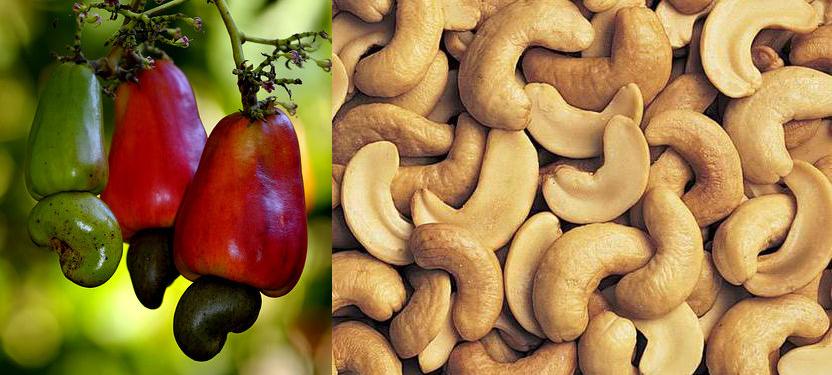
Plantation farming means the cultivation of a single cash crop in plantations or estates (large areas of land) on a large scale. The farming is carried on with the help of technically advanced methods of cultivation and tools. Plantation crops constitute a large group of crops. The major plantation crops include coconut, arecanut, oil palm, cashew, tea, coffee and rubber; and the minor plantation crops include cocoa. India is the second largest producer and largest consumer of cashew nuts (2010). The total production of cashew is around 0.57 million tonnes from an area of 0.24 million hectares. India also occupies number one position in arecanut production.

 Tea and coffee are the main and oldest industries in the country, which provide ample employment opportunities to the people at large and holds immense potential for export. India is one of the largest tea producer in the world. Coffee is the second largest traded commodity in the world and is an extremely important foreign exchange earner. The coffee industry of India is one of the largest producer of coffee in the world. India contributes 4 per cent of total world production.India is the fourth largest producer of natural rubber (NR) with a share of 8.8 per cent in world production in 2006.

India is the third largest producer of coconut and leads 90 coconut-producing countries of the world. The area for coconut plantation in India has been majorly distributed over 18 States and 3 UTs, under different agro-climatic conditions. India is a premier coir manufacturing country in the world. Wide range of coconut products, edible and non-edible, are available for both domestic and export market. Tender coconut water concentrate is another product, apart from soft drinks, which is manufactured and marketed successfully.

But, in India, plantation crops have been continuously facing the problem of lack of investment and depressed yields, and are in great need of modernisation. Their total coverage is comparatively less and they are mostly confined to small holdings. Thus, the Government of India has identified some prominent crops as high-value crops of great economic importance. It is taking all possible steps and initiatives to commercialize the sector. Tea, coffee, rubber and coconut industries are providing greater business opportunities to the investors worldwide.

 The Economic Importance of Plantation Crops: 

1. They contribute to national economy by way of export earnings. These crops occupy less than 2 per cent of the total cultivated area (i.e. 3.82 per cent of total crop land) but they generate an income of around Rs. 16,000 million or 75 per cent of total earnings from the export of agricultural produces.

2. India is the leading country in the total production of certain plantation crops in the world. For instance, our production meets the share of 47 per cent in tea and 66 per cent in each of cashew and arecanut,

3. Plantation industry provides direct as well as indirect employment lo many millions of people. For instance, tea industry offers direct employment to 10 lakhs and indirect employment to 10 lakh people, while-cashew processing factories alone provide employment to 3 lakhs people besides 2 lakhs farmers are employed in cashew cultivation.

4. Plantation industry supports many by-product industries and also many rural industries. For example, coconut husk is used to produce coir fiber annually to a tune of 2,19,600 tones in India.

5. These crops help to conserve the soil and ecosystem. Tea planted in hill slopes and cashew in barrel and waste lands protect the land from soil erosion during the rainy season or due to heavy winds.

The Department of Agriculture and Cooperation, Ministry of Agriculture, is the nodal agency in India which deals with various aspects of plantation crops. It is, not only, engaged in formulation of national policies, schemes and programmes for promoting entrepreneurship in the sector, but also supplements and complements the efforts being made by the State Governments to promote production and productivity of varied plantation crops.

The Central Plantation Crops Research Institute (CPCRI) has been set up as the pioneering institute in India for conducting research on plantation crops. It was established in 1916, but subsequently brought under the mandate of Indian Council of Agricultural Research (ICAR) during 1970. Its initial mandate was on crop husbandry of coconut, arecanut, cocoa, oil palm, cashew and spices. However, the restructuring process resulted in the establishment of separate Research Institute/Centres for Spices, Cashew and oil palm, but the CPCRI continued to maintain strong linkage with these institutes. The main aim of the institute is to develop appropriate production, protection and processing technologies for coconut, arecanut and cocoa through basic and applied research.

 There is a Tea Board of India, which has been set up under the Ministry of Commerce and Industry, for promoting sound development of tea industries in India. The main functions of tea board include rendering financial and technical assistance for cultivation, manufacture, marketing of tea; promoting tea exports; aiding research and developmental activities for augmentation of tea production and improvement of tea quality as well as encouraging and assisting small growers sector financially and technically.

The Coffee Board of India is an autonomous body, functioning under the Ministry of Commerce and Industry, which serves as a guide of the coffee industry in India. The Board focuses on research, development, extension, quality upgradation, market information, and the domestic and external promotion of Indian coffee.

There is Rubber Board, under the Ministry of Commerce and Industry, which is actively engaged in the development of the rubber industry in India. It perform various activities like assisting and encouraging scientific, technical and economic research in the area of rubber; supplying technical advice to rubber growers; and training growers regarding improved methods of plantation and cultivation.

Besides, the Directorate of Cashewnut and Cocoa Development is a national agency primarily engaged in the overall development of cashew and cocoa in India.

Schemes and Incentives 

For the integrated promotion of entrepreneurship in the sector of plantation crops, the Government has framed many schemes and policies, from time to time. All these aim to increase the productivity levels of plantation crops like tea, coffee, rubber, etc. as well as to provide greater incentives to the growers of the crops. Presently, one of the most prominent schemes has been the 'Price Stabilization Fund Scheme (PSFS)'. The main objective of PSF has been to safeguard the interests of growers and provide financial relief when prices fall below a specified level without resorting to the practice of procurement operations by the Government agencies.

In order to protect the interest of the coconut growers, the Government has launched the 'Technology Mission on Coconut'. The main aim of the Mission is to help develop a mechanism which makes coconut farming competitive and ensures reasonable returns.

more info - Click Here


National Water Policy (2012)


The Ministry of Water Resources has formulated a draft National Water Policy (2012) after extensive consultation process with Members of Parliament; Academia, Experts and Professionals; Non-Governmental Organizations; Corporate Sector and representatives of Panchayati Raj Institutions. The Ministry also circulated the draft National Water Policy (2012) amongst all States and related Central Ministries earlier in 2012.

Need for a Water Policy

Water is a natural resource, fundamental to life, livelihood, food security and sustainable development. It is also a scarce resource. India has more than 17 percent of the world’s population, but has only 4% of world’s renewable water resources with 2.6% of world’s land area. There are further limits on utilizable quantities of water owing to uneven distribution over time and space. In addition, there are challenges of frequent floods and droughts in one or the other part of the country. With a growing population and rising needs of a fast developing nation as well as the given indications of the impact of climate change, availability of utilizable water will be under further strain in future with the possibility of deepening water conflicts among different user groups. Low consciousness about the scarcity of water and its life sustaining and economic value results in its mismanagement, wastage, and inefficient use, as also pollution and reduction of flows below minimum ecological needs. In addition, there are inequities in distribution and lack of a unified perspective in planning, management and use of water resources.

The objective of the National Water Policy is to take cognizance of the existing situation, to propose a framework for creation of a system of laws and institutions and for a plan of action with a unified national perspective.

Even while it is recognized that States have the right to frame suitable policies, laws and regulations on water; there is a felt need to evolve a broad over-arching national legal framework of general principles on water to lead the way for essential legislation on water governance in every State of the Union and devolution of necessary authority to the lower tiers of government to deal with the local water situation.

 Concerns related to water resources as recognised by the Draft National Water Policy (2012)

The present scenario of water resources and their management in India has given rise to several concerns, important amongst them are :
  1. Large parts of India have already become water stressed. Rapid growth in demand for water due to population growth, urbanization and changing lifestyle pose serious challenges to water security.
  2. Issues related to water governance have not been addressed adequately. Mismanagement of water resources has led to a critical situation in many parts of the country.
  3. There is wide temporal and spatial variation in availability of water, which may increase substantially due to a combination of climate change, causing deepening of water crisis and incidences of water related disasters, i.e., floods, increased erosion and increased frequency of droughts, etc.
  4. Climate change may also increase the sea levels. This may lead to salinity intrusion in ground water aquifers / surface waters and increased coastal inundation in coastal regions, adversely impacting habitations, agriculture and industry in such regions.
  5. Access to safe water for drinking and other domestic needs still continues to be a problem in many areas. Skewed availability of water between different regions and different people in the same region and also the intermittent and unreliable water supply system has the potential of causing social unrest.
  6. Groundwater, though part of hydrological cycle and a community resource, is still perceived as an individual property and is exploited inequitably and without any consideration to its sustainability leading to its over-exploitation in several areas.
  7. Water resources projects, though multi-disciplinary with multiple stakeholders, are being planned and implemented in a fragmented manner without giving due consideration to optimum utilization, environment sustainability and holistic benefit to the people.
  8. Inter-regional, inter-State, intra-State, as also inter-sectoral disputes in sharing of water, strain relationships and hamper the optimal utilization of water through scientific planning on basin/sub-basin basis.
  9. Grossly inadequate maintenance of existing irrigation infrastructure has resulted in wastage and under-utilization of available resources. There is a widening gap between irrigation potential created and utilized.
  10. Natural water bodies and drainage channels are being encroached upon, and diverted for other purposes. Groundwater recharge zones are often blocked.
  11. Growing pollution of water sources, especially through industrial effluents, is affecting the availability of safe water besides causing environmental and health hazards. In many parts of the country, large stretches of rivers are both heavily polluted and devoid of flows to support aquatic ecology, cultural needs and aesthetics.
  12. Access to water for sanitation and hygiene is an even more serious problem. Inadequate sanitation and lack of sewage treatment are polluting the water sources.
  13. Low public consciousness about the overall scarcity and economic value of water results in its wastage and inefficient use.
  14. The lack of adequate trained personnel for scientific planning, utilizing modern techniques and analytical capabilities incorporating information technology constrains good water management.
  15. A holistic and inter-disciplinary approach at water related problems is missing.
  16. The public agencies in charge of taking water related decisions tend to take these on their own without consultation with stakeholders, often resulting in poor and unreliable service characterized by inequities of various kinds. 
  17. Characteristics of catchment areas of streams, rivers and recharge zones of aquifers are changing as a consequence of land use and land cover changes, affecting water resource availability and quality.
The basic principles guiding the Draft National Water Policy (2012)

Public policies on water resources need to be governed by certain basic principles, so that there is some commonality in approaches in dealing with planning, development and management of water resources. These basic principles are:  
  • Planning, development and management of water resources need to be governed by common integrated perspective considering local, regional, State and national context, having an environmentally sound basis, keeping in view the human, social and economic needs.
  • Principle of equity and social justice must inform use and allocation of water.
  • Good governance through transparent informed decision making is crucial to the objectives of equity, social justice and sustainability. Meaningful intensive participation, transparency and accountability should guide decision making and regulation of water resources.
  • Water needs to be managed as a common pool community resource held, by the state, under public trust doctrine to achieve food security, support livelihood, and ensure equitable and sustainable development for all.
  • Water is essential for sustenance of eco-system, and therefore, minimum ecological needs should be given due consideration.
  • Water, after meeting the pre-emptive needs for safe drinking water, sanitation and high priority allocation for other domestic needs (including needs of animals), achieving food security, supporting sustenance agriculture and minimum eco-system needs, may be treated as economic good so as to promote its conservation and efficient use.
  • All the elements of the water cycle, i.e., evapo-transpiration, precipitation, runoff, river, lakes, soil moisture, and ground water, sea, etc., are interdependent and the basic hydrological unit is the river basin, which should be considered as the basic hydrological unit for planning.
  • Given the limits on enhancing the availability of utilizable water resources and increased variability in supplies due to climate change, meeting the future needs will depend more on demand management, and hence, this needs to be given priority, especially through (a) evolving an agricultural system which economizes on water use and maximizes value from water, and (b) bringing in maximum efficiency in use of water and avoiding wastages.
  • Water quality and quantity are interlinked and need to be managed in an integrated manner, consistent with broader environmental management approaches inter-alia including the use of economic incentives and penalties to reduce pollution and wastage.
  • The impact of climate change on water resources availability must be factored into water management related decisions. Water using activities need to be regulated keeping in mind the local geo climatic and hydrological situation.
Salient Features of Revised Draft National Water Policy (November,2012) 

1. Emphasis on the need for a national water framework law, comprehensive legislation for optimum development of inter-State rivers and river valleys, amendment of Irrigation Acts, Indian Easements Act, 1882, etc.

2. Water, after meeting the pre-emptive needs for safe drinking water and sanitation, achieving food security, supporting poor people dependent on agriculture for their livelihood and high priority allocation for minimum eco-system needs, be treated as economic good so as to promote its conservation and efficient use.

3. Ecological needs of the river should be determined recognizing that river flows are characterized by low or no flows, small floods (freshets), large floods and flow variability and should accommodate development needs. A portion of river flows should be kept aside to meet ecological needs ensuring that the proportional low and high flow releases correspond in time closely to the natural flow regime.

4. Adaptation strategies in view of climate change for designing and management of water resources structures and review of acceptability criteria has been emphasized.

5. A system to evolve benchmarks for water uses for different purposes, i.e., water footprints, and water auditing be developed to ensure efficient use of water. Project financing has been suggested as a tool to incentivize efficient & economic use of water.

6. Setting up of Water Regulatory Authority has been recommended. Incentivization of recycle and re-use has been recommended.

7. Water Users Associations should be given statutory powers to collect and retain a portion of water charges, manage the volumetric quantum of water allotted to them and maintain the distribution system in their jurisdiction.

8. Removal of large disparity in stipulations for water supply in urban areas and in rural areas has been recommended.

9. Water resources projects and services should be managed with community participation. Wherever the State Governments or local governing bodies so decide, the private sector can be encouraged to become a service provider in public private partnership model to meet agreed terms of service delivery, including penalties for failure.

10. Adequate grants to the States to update technology, design practices, planning and management practices, preparation of annual water balances and accounts for the site and basin, preparation of hydrologic balances for water systems, and benchmarking and performance evaluation.

Details 


Draft National Water Policy 2012


Indian Wildlife (Animals)


India has some of the world's most biodiverse regions. India's rich and abundant animal life is attributed to it's diverse climate and geography.The political boundaries of India encompass a wide range of ecozones—desert, high mountains, highlands, tropical and temperate forests, swamplands, plains, grasslands, areas surrounding rivers, as well as island archipelago. It hosts 3 biodiversity hotspots: the Western Ghats, the Himalayas and the Indo-Burma region. These hotspots have numerous endemic species.

India displays significant biodiversity. One of eighteen megadiverse countries, it is home to 7.6% of all mammalian, 12.6% of all avian, 6.2% of all reptilian, 4.4% of all amphibian, 11.7% of all fish, and 6.0% of all flowering plant species.  

There are about 2,546 species of fishes (about 11% of the world species) found in Indian waters. About 197 species of amphibians (4.4% of the world total) and more than 408 reptile species (6% of the world total) are found in India. Among these groups the highest levels of endemism are found in the amphibians.There are about 1,250 species of birds from India, with some variations, depending on taxonomic treatments, accounting for about 12% of the world species.There are about 410 species of mammals known from India, which is about 8.86% of the world species 

Important Animals of India 

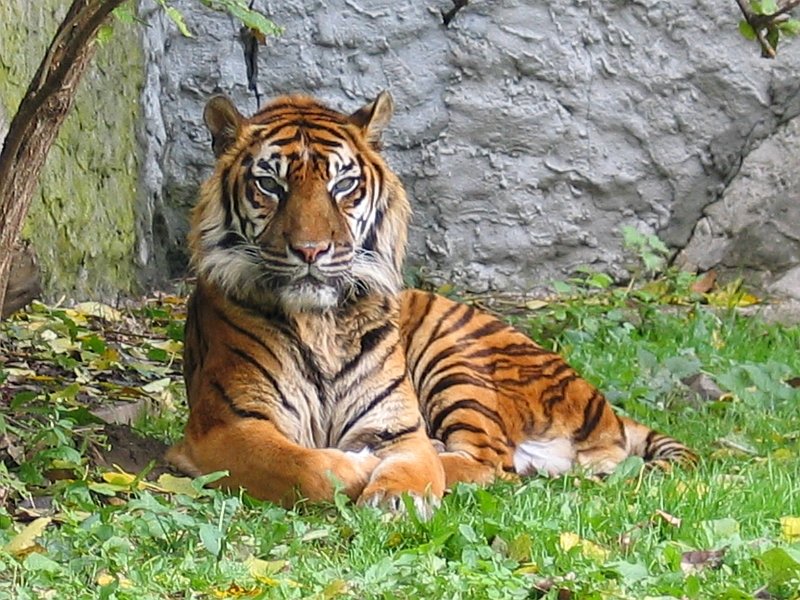
Bengal Tiger


Bengal tiger is a subspecies of tiger, which is found in the Bengal region of the Indian subcontinent. One of the most common tiger subspecies, it is also found in a number of other Asian countries, like Bangladesh, Nepal, Bhutan, Myanmar, Tibet, etc. Usually Royal Bengal Tigers of India are reddish-brown to rust-brown in color with black stripes all over. However, a mutation may result in their color being white also. Such a tiger is known as the White tiger. Bengal tiger is the national animal of both the Indian subcontinent as well as Bangladesh. One can visit Bengal Tiger to any Tiger Reserve in India.

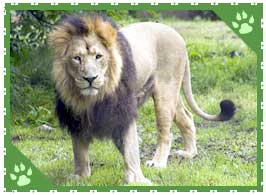
Indian Asiatic Lion


Asiatic Lions once used to roam around the area, stretching from northern Greece, across Southwest Asia, to central India. However, today, the natural habitat of the majestic animal has been reduced to the Gir forests of India only, making the Asiatic Lion almost synonymous with the Indian Lion. Known scientifically as Panthera Leo persica, the royal animal is depicted on the National Emblem of India, since it represents power, strength and sovereignty. Gir National Park is the only remaining place in the world, where one is likely to see the Asiatic Lion.

Indian Clouded Leopard


The Clouded Leopard (Neofelis nebulosa) is a medium-sized cat found in North-East India and Southeast Asia. It has a tan or tawny coat, and is distinctively marked with large, irregularly-shaped, dark-edged ellipses which are said to be shaped like clouds. This unique appearance gave the mammal both its common and scientific species name (Nebulosus is the Latin for “cloudy”). The Clouded Leopard was a confusion to scientists for a long time because of the appearance and skeleton. It was what seemed to be a cross in between a big cat and a small cat. The scientific name of the genus, Neofelis, originates from neo, which means “new”, and felis, which means “small cat”, so it literally means new kind of small cat.

Indian Leopard


Indian leopard is one of the 8-9 valid leopard subspecies found throughout the world. Known by the scientific name of Panthera pardus, it is the fourth largest of the four 'big cats' of the Panthera genus. At the same time, leopards are also the fifth largest of all cat species. The name 'Leopard' has been derived from a combination of two Greek and Latin words leo and pard, 'leo' meaning lion and 'pard' meaning panther. This name was given to the animal since it was initially believed to be crossbreed of a lion and a panther.

Indian Snow Leopard


Snow leopard is a native animal of mountain ranges of central and southern Asia, including India. It is also known as Ounce and has a scientific name of "Panthera uncia". Snow leopards can live for a maximum of 18 years in then wild. In captivity, their lifespan increases to 20 years.

Indian Black Bear


Indian black bear is also known by the names of Asiatic Black Bear (Ursus thibetanus), Tibetan black bear, Himalayan black bear and Moon bear. They grow to a length of approximately 4 to 6 feet, right from the nose to the tail. The small eyes of the bear, along with its rounded ears, a long snout, a large body, a short tail, and shaggy hair, differentiate it from the other types of bears. The small shoulder hump, a furry rear instep, a concave facial contour, small and curved claws and narrow ears further accentuate the difference. Last but not the least, Asiatic black bear also has a whitish V-shaped breast patch, not found in the other bear species of India.

The male black bear weighs between 220 and 480 pounds, while the females are110 to 275 pounds in weight. The senses of the Himalayan black bears of India are greatly developed and they boast of almost twice the hearing sensitivity possessed by humans. Black bears have colored vision and their eyesight is very sharp. Even their olfactory senses (ability to smell) are highly evolved. The mating season of the Himalayan black bears is usually from late May to early July. They give birth to two cubs at a time, which stay with the mother for almost seventeen months.

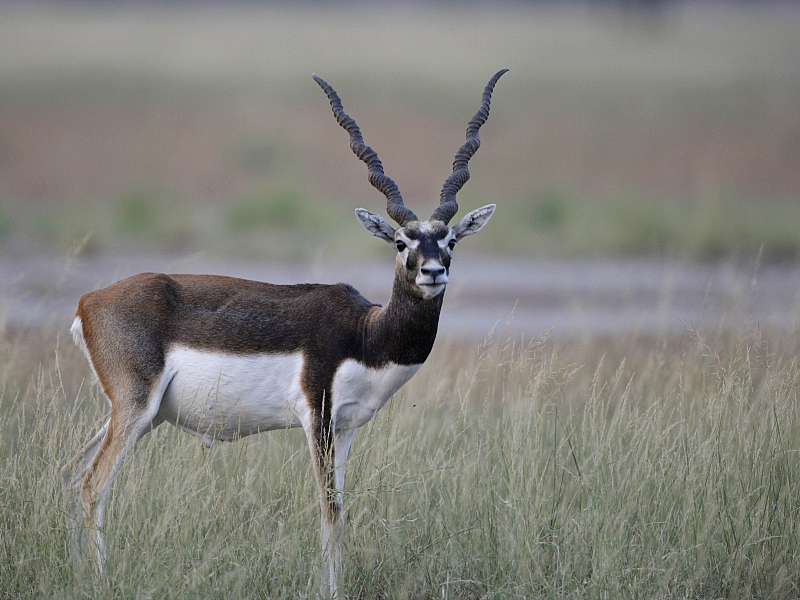
Indian Black Buck


Indian black buck is also known by a number of other names like Kala Hiran, Sasin, Iralai Maan and Krishna Jinka. The scientific name of the black buck antelope is Antilope cervicapra and it natural habitat is the Indian subcontinent. Grass forms the staple diet of the blackbucks. However, they do eat pods, flowers and fruits as supplements. The average lifespan of the Indian kala hiran is twelve years and at the maximum, they live for sixteen years. Black bucks are hunted by dogs and wolves.

Indian Gazelle


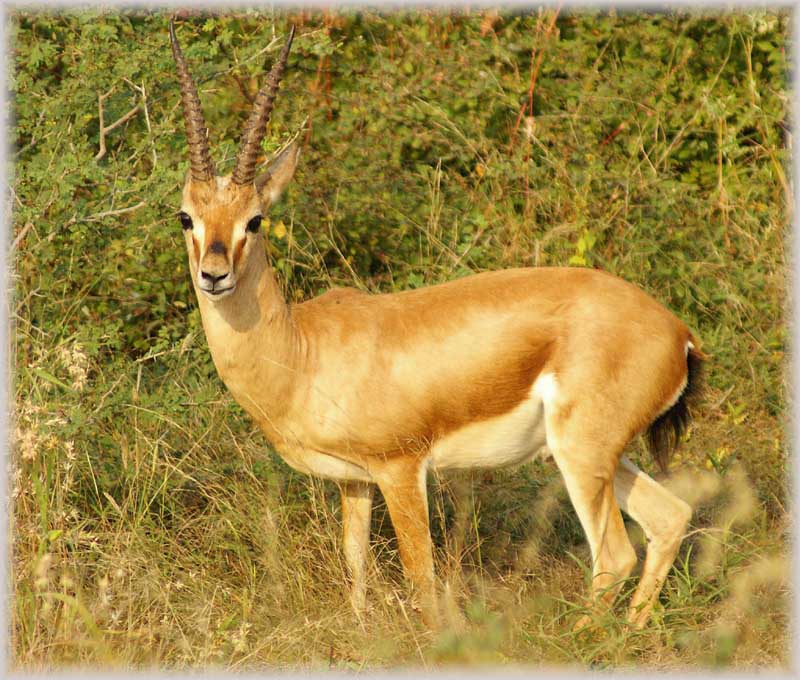
Indian Gazelle, also known as Chinkara, is a species of gazelle found in South Asia. It belongs to the Bovidae family and is scientifically known as Gazella bennettii. The life expectancy of a Chinkara is between 12 to 15 years, less than that of many other deer species. Male gazelles are believed to be territorial in nature and are not prone to wandering for large distances. Gazelles come across as very nervous animals and always seem to be on alert. It is believed that the dwindling population of Chinkaras is leading to a decline in the population of Cheetah, their main predators, in India.

Axis Deer


Axis Deer, also known as Chital Deer or Spotted Deer, is the native animal of the Indian subcontinent. It is found very commonly in India and is one of the most beautiful animals in the country. The spotted deer of India was introduced in the state of Texas in the 1930s. Since that time, axis deer of India has become the most widespread of the entire deer species.

Brow-antlered Deer


Brow-antlered deer are known by the scientific name of Cervus eldii. They have a number of other names also, like Eld's Deer, Sangai Deer, Thamin Deer and even Dancing Deer. The maximum lifespan of the Thamin deer of India is only ten years and the deer has three subspecies also.

Hog Deer


Hog Deer is a subspecies of deer, found in the areas stretching from Pakistan, through northern India, to mainland Southeast Asia. A population of the hog deer was introduced in a number of countries, including Australia, the United States and Sri Lanka.

Sambar Deer


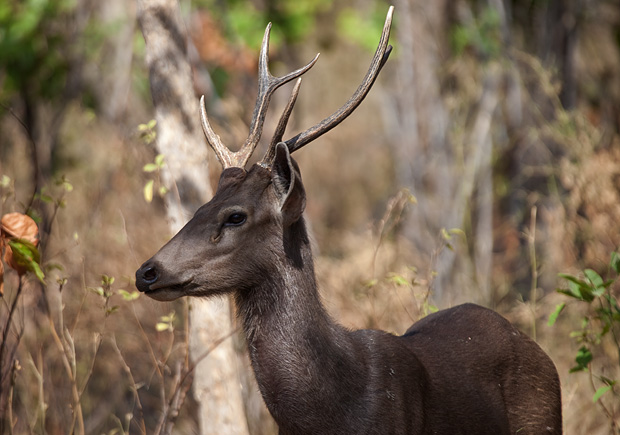
Sambar Deer are dark brown in color and attain a height of 102 cm to 160 cm (40 to 63 inches). The weight of the sambar deer of India may touch 300 kg. There are chestnut marks on the rump as well as the underparts. Sambhur deer of India also have beautiful manes. However, they are not spotted by birth. The spots develop gradually after birth.

Swamp Deer


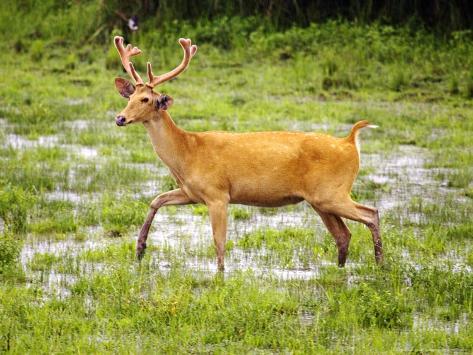
Swamp Deer, also known as Barasingha, is one of the most vulnerable species of deer of the Indian subcontinent as well as the world. Presently, one can find them only in the protected sanctuaries of India. Known by the scientific name of Cervus duvauceli, the swamp deep of India derives its name, Barasingha, from its large antlers.

Nilgai


Nilgai, also known as Blue Bull, is one of the most commonly found wild animals of northern India as well as eastern Pakistan. Even though it is an antelope, it looks quite similar in appearance to an ox. Therefore, it has been given the name of Blue bull of India. The average lifespan of the Neelgai is 21 years.

Indian bison


The gaur (Indian Bison) is a large bovine native to South Asia and Southeast Asia. Gaur is found throughout mainland South and Southeast Asia.Gaur are largely confined to evergreen forests or semi-evergreen and moist deciduous forests, but also occur in deciduous forest areas at the periphery of their range. Gaur habitat is characterized by large, relatively undisturbed forest tracts, hilly terrain below an altitude of 5,000 to 6,000 ft (1,500 to 1,800 m), availability of water, and an abundance of forage in the form of grasses, bamboo, shrubs, and trees. Their apparent preference for hilly terrain may be partly due to the earlier conversion of most of the plains and other low-lying areas to croplands and pastures.They occur from sea level up to at least 2,800 m (9,200 ft) altitude. Low-lying areas seem to comprise optimal habitat.

Indian Elephant


Indian elephant, known with the scientific name of 'Elephas maximus indicus', is a subspecies of the Asian Elephant. It is mainly found in the Indian subcontinent, that to in the scrub forested areas. The other counties where Asian elephants are found include Bangladesh, Bhutan, Borneo, Cambodia, China, Laos, Malaysia, Myanmar, Nepal, Thailand, Sumatra, and Vietnam. Since Indian elephants are very huge and can trample all other creatures, they have no natural enemies. Even lions, hyenas, and tigers attack only the very young elephants and not adults.

Indian Camel


The camels found in India are the single-humped camels, also known as the Dromedary camels. Long-curved neck, deep-narrow chest and a single hump characterize the Indian camel. The hump is used by the camels as reservoir of fatty tissues. In times of scarcity, the tissues are metabolized and the camel receives energy. The size of the hump is not the same in all the camels. It differs from one camel to another, depending upon its nutritional state. In times of starvation, the hump can get reduced to almost a non-existent size.

Indian dromedary camels have a heavy growth of hair on throat, shoulder, and hump, which is longer than the rest of the body. On an average, the camels in India live for a period of 40 to 50 years. They are widely used by the people of Rajasthan as a means of transportation. Infact, the camels are known as the 'Ship of the Desert'. They are used for carrying goods as well as people. Indian camels also provide humans with milk, meat, wool, leather and fuel (from their dried dung).

Indian Rhinoceros


Indian Rhinoceros holds the distinction of being the fourth largest animal, after the three elephant species. Known by the scientific name of Rhinoceros unicornis, the animal is found in only two places in the world, Assam (India) and Nepal. The Great Indian rhinoceros is a brilliant swimmer and has an acute sense of smell and hearing. Its maximum speed reaches 55 km/h, that to for a short period of time.

The only drawback of the Indian rhino, also known as the Great One-Horned Rhinoceros, is that its eyesight is quite poor. The sheer size of the rhinos has resulted in a few natural enemies. They may be attacked by tigers, but there are hardly any recorded incidents of a tiger killing a full-grown Indian rhino. However, they may kill unguarded calves at times.

Indian Wild Ass


Indian wild ass, also known as khur, is one of the subspecies of wild ass belonging to southern Asia. Its scientific name is Equus hemionus khur. Wild ass of India has an average age of 20-25 years.

Indian Wild Boar


 Wild boar is considered to be the wild antecedent of the domestic pig of the Indian subcontinent. It belongs to the Suidae biological family, which also includes the Warthog and Bushpig of Africa, the Pygmy Hog of northern India and the Babirusa of Indonesia. Indian wild boars are also quite closely related to peccary or javelina of North, Central and South America.

Indian Striped Hyena


Striped hyena belongs to the Hyaenidae family and is scientifically known as Hyaena hyaena. Strongly related to the Brown hyena, it is basically a solitary creature. The average lifespan of striped hyenas hovers somewhere around 10 to 12 years in the wild. When kept in captivity, they can live longer also.

Indian Red Panda


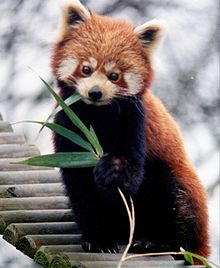
Red panda is a beautiful animal, found in only some other countries of the world, including the Indian subcontinent. Scientifically known as Ailurus fulgens, it is slightly bigger than the domestic cat and founds a mention in the list of endangered species. Indian red panda bear is quite apt at climbing trees and is mainly herbivorous. It is also known as the Red fox or the Common panda and is native to the Himalayan ranges of India. A one of its kind animals, Red panda is believed to be a living fossil. The only other fossil close to the panda is that of Parailurus, which lived 3 to 4 million years ago. The lifespan of a Red Panda may range from nine years to fourteen years.

Rhesus Macaque


A typical macaque, the Rhesus monkey of India is believed to be one of the best species of the Old World monkeys. It is an excellent swimmer and enjoys water. Rhesus macaques are quite comfortable around humans and have the tendency to move from rural to urban areas in search of easy food. The average lifespan of Rhesus macaques is approximately 15 years in the wild.

Lion Tailed Macaque


Lion-tailed Macaque is one of the subspecies of macaque, found only in the Western Ghats of South India. Known by the scientific name of Macaca silenus, it has life expectancy of 20 years in the wild and upto 30 years in captivity. Lion-tailed macaques spend most of their time on trees and are excellent swimmers.

Hanuman Langur


Hanuman Langur is believed to be one of the Old World monkeys, belonging to the Semnopithecus Genus. They comprise of 15 subspecies and are terrestrial in nature. Earlier hanuman langurs were believed to comprise of a single species. However, now they are recognized as seven distinct species. Hanuman langur is also known by the name of Gray Langur, Entellus Langur and Common Indian Langur.

Golden Langur


Golden Langur, or Gee's Golden Langur, is known by the scientific name of Trachypithecus geei. An Old World monkey, it was first noticed by the scientific community in the 1950s only. In the Indian subcontinent, Golden langurs are found mainly in the foothills of the Himalayas, along the Assam-Bhutan border. The langurs are considered to be sacred by the Himalayan people. The coat of Indian golden langurs is covered with rich golden to bright creamish hair. The face is black and they have a very long tail, which may measure upto 50 cm in length.

Hoolock Gibbon 


Hoolocks are the second-largest of the gibbons, after the siamang. They reach a size of 60 to 90 cm and weigh 6 to 9 kg. It is the only ape to be found in India and is generally to seen in the forests of the North- East India and neighboring Bangladesh and Burma. The males have a black coat and the females can be distinguished by their lighter coat having grayish color.

Hoolocks prefer to live in small groups in the hilly forests and feed on tender leaves, fruits, and insects including spiders. Their main source of water is from the dew which forms on the leaves. The young ones are normally born in the winter months between December and March. The average height of a Gibbon is 3 feet and the arms are normally double the length of its legs.

More Info :

List of Animal Species

Species of India - Apes Family of India

Species of India - Cats Family of India 

Species of India - Dog Family of India

Species of India - Bears Family of India 

Species of India - Ungulates of India 

Species of India - Antelopes & Gazelles 

Species of India - Deer Family of India