Thursday, December 29, 2011

Science’s Breakthrough of the Year (2011)


Antiretroviral Therapy (ART)


The journal Science has lauded an eye-opening HIV study, known as HPTN 052, as the most important scientific breakthrough of 2011. This clinical trial demonstrated that people infected with HIV are 96% less likely to transmit the virus to their partners if they take antiretroviral drugs (ARVs).The findings end a long-standing debate over whether ARVs could provide a double benefit by treating the virus in individual patients while simultaneously cutting transmission rates. It’s now clear that ARVs can provide treatment as well as prevention when it comes to HIV, researchers agree.


The Hayabusa Mission 

After some near-disastrous technical difficulties and a stunningly successful recovery, Japan’s Hayabusa spacecraft returned to Earth with dust from the surface of a large S-type asteroid. This asteroid dust represented the first direct sampling of a planetary body in 35 years, and analysis of the grains confirmed that the most common meteorites found on Earth, known as ordinary chondrules, are born from these much larger S-type asteroids.

Click --> Chondrites


Unraveling Human Origins 

Studying the genetic code of both ancient and modern human beings, researchers discovered that many humans still carry DNA variants inherited from archaic humans, such as the mysterious Denisovans in Asia and still-unidentified ancestors in Africa. One study this year revealed how archaic humans likely shaped our modern immune systems, and an analysis of Australopithecus sediba fossils from South Africa showed that the ancient hominin possessed both primitive and Homo-like traits.


Capturing a Photosynthetic Protein 

In vivid detail, researchers in Japan have mapped the structure of the Photosystem II, or PSII, protein that plants use to split water into hydrogen and oxygen atoms. The crystal-clear image shows off the protein’s catalytic core and reveals the specific orientation of atoms within. Now, scientists have access to this catalytic structure that is essential for life on Earth—one that may also hold the key to a powerful source of clean energy.

Pristine Gas in Space

Astronomers using the Keck telescope in Hawaii to probe the faraway
universe wound up discovering two clouds of hydrogen gas that seem to have maintained their original chemistry for two billion years after the Big Bang. Other researchers identified a star that is almost completely devoid of metals, just as the universe’s earliest stars must have been, but that formed much later. The discoveries show that pockets of matter persisted unscathed amid eons of cosmic violence.

Getting to Know the Microbiome

Research into the countless microbes that dwell in the human gut demonstrated that everyone has a dominant bacterium leading the gang in their digestive tract: Bacteroides, Prevotella, or Ruminococcus. Follow-up studies revealed that one of these bacteria thrives on a high-protein diet while another prefers vegetarian fare. These findings and more helped to clarify the interplay between diet and microbes in nutrition and disease.

A Promising Malaria Vaccine

Early results of the clinical trial of a malaria vaccine, known as RTS,S, provided a shot in the arm to malaria vaccine research. The ongoing trial, which has enrolled more than 15,000 children from seven African countries, reassured malaria researchers, who are used to bitter disappointment, that discovering a malaria vaccine remains possible.

Strange Solar Systems

This year, astronomers got their first good views of several distant planetary systems and discovered that things are pretty weird out there. First, NASA’s Kepler observatory helped identify a star system with planets orbiting in ways that today’s models cannot explain. Then, researchers discovered a gas giant caught in a rare “retrograde” orbit, a planet circling a binary star system, and 10 planets that seem to be freely floating in space—all unlike anything found in our own solar system.

Designer Zeolites

Zeolites are porous minerals that are used as catalysts and molecular sieves to convert oil into gasoline, purify water, filter air, and produce laundry detergents (to name a few uses). This year, chemists really showed off their creativity by designing a range of new zeolites that are cheaper, thinner, and better equipped to process large organic molecules.

more about zeolites

Clearing Senescent Cells

Experiments revealed that clearing senescent cells, or those that have stopped dividing, from the bodies of mice can delay the onset of age-related symptoms such as cataracts and muscle weakness. Mice whose bodies were cleared of these loitering cells didn’t live longer than their untreated cage-mates—but they did seem to live better, which provided researchers with some hope that banishing senescent cells might also prolong our golden years.

Monday, December 26, 2011

Stem Cells

Stem cell is a cell whose job in the body is not yet determined (they are unspecialized).Every single cell in the body stems from this type of cell.Hence the name stem cell.Stem cells have the remarkable potential to develop into many different cell types in the body during early life and growth. In addition, in many tissues they serve as a sort of internal repair system, dividing essentially without limit to replenish other cells as long as the person or animal is still alive. When a stem cell divides, each new cell has the potential either to remain a stem cell or become another type of cell with a more specialized function, such as a muscle cell, a red blood cell, or a brain cell.

Self - renewal (ability to go through numerous cycles of cell division while maintaining undifferentiated state) and Potency (capacity to differentiate into specialized cell types)  are the unique properties of stem cells.


why are they important?

Stem cells are important for living organisms for many reasons. In the 3- to 5-day-old embryo, called a blastocyst, the inner cells give rise to the entire body of the organism, including all of the many specialized cell types and organs such as the heart, lung, skin, sperm, eggs and other tissues. In some adult tissues, such as bone marrow, muscle, and brain, discrete populations of adult stem cells generate replacements for cells that are lost through normal wear and tear, injury, or disease.

Given their unique regenerative abilities, stem cells esp. embryonic stem cells could be used to replace any part of the body damaged by accident or illness. It could lead to cures for such recalcitrant diseases as Parkinson's, Alzheimer's and diabetes. Some scientists believe the cells might eventually allow those who are paralyzed to walk again.  However, much work remains to be done in the laboratory and the clinic to understand how to use these cells for cell-based therapies to treat disease, which is also referred to as regenerative or reparative medicine.


Two broad types of mammalian stem cells are :

1.Embryonic stem cells
2.Adult stem cells

Embryonic stem cells are derived from embryos that develop from eggs that have been fertilized in vitro.Adult stem cells are undifferentiated cells, found throughout the body after embryonic development, that multiply by cell division to replenish dying cells and regenerate damaged tissues. Adult stem cells are also  known as somatic stem cells.


Similarities and differences between Embryonic and Adult stem cells


Human embryonic and adult stem cells each have advantages and disadvantages regarding potential use for cell-based regenerative therapies. Of course, adult and embryonic stem cells differ in the number and type of differentiated cells types they can become. Embryonic stem cells can become all cell types of the body because they are pluripotent. Adult stem cells are generally limited to differentiating into different cell types of their tissue of origin(multipotent stem cells). However, some evidence suggests that adult stem cell plasticity may exist, increasing the number of cell types a given adult stem cell can become.

Large numbers of embryonic stem cells can be relatively easily grown in culture, while adult stem cells are rare in mature tissues and methods for expanding their numbers in cell culture have not yet been worked out. This is an important distinction, as large numbers of cells are needed for stem cell replacement therapies.

A potential advantage of using stem cells from an adult is that the patient's own cells could be expanded in culture and then reintroduced into the patient. The use of the patient's own adult stem cells would mean that the cells would not be rejected by the immune system. This represents a significant advantage as immune rejection is a difficult problem that can only be circumvented with immunosuppressive drugs.

Embryonic stem cells from a donor introduced into a patient could cause transplant rejection. However, whether the recipient would reject donor embryonic stem cells has not been determined in human experiments.

The unique potential contribution of human embryonic stem cells to therapies is a product of both their longevity and their capacity to produce a wide range of specialised cells in the laboratory. By contrast, adult stem cells that are grown in the laboratory appear to have much shorter lifespans than embryonic stem cells. This reduces their capacity to form new cell types. Stem cells can also be obtained from aborted fetuses and umbilical cord blood, but it is not clear whether the full range of cell types that are required for treatments could eventually be generated from these sources alone.


Stem cell controversy

The stem cell controversy is the ethical debate primarily concerning the creation, treatment, and destruction of human embryos incident to research involving embryonic stem cells. The status of the human embryo and human embryonic stem cell research is a controversial issue as, with the present state of technology, the creation of a human embryonic stem cell line requires the destruction of a human embryo. Stem cell debates have motivated and reinvigorated the pro-life movement, whose members are concerned with the rights and status of the embryo as an early-aged human life.They believe that embryonic stem cell research instrumentalizes and violates the sanctity of life and is tantamount to murder.The fundamental assertion of those who oppose embryonic stem cell research is the belief that human life is inviolable, combined with the belief that human life begins when a sperm cell fertilizes an egg cell to form a single cell.Crucial to the argument is the issue of whether the embryo/foetus  is a “person”. The unborn child is not legally classified as a person, various courts also noted then that if the “personhood” of the preborn is established, then the case for the right to abortion collapses, because the foetus's right to life is then guaranteed by the constitutions.


Stem cell research in India 


Stem Cell research in India is still in its infancy.Rules in India say embryos should not be generated for the sole purpose of obtaining stem cells. Only surplus or spare embryos can be used after obtaining informed consent of both spouses. Such collection of embryos should be done only from registered Assisted Reproductive Technique (ART) clinics.Though India is seen as a potential bio-tech powerhouse, lack of regulation has made stem cell research disorganized and unsafe. Now germ line that deals with research with genetic material like ova and sperm that is passed from parents to children would not be allowed. The ethical issue is the contention that this research, which seeks to identify genetic qualities, can be used to manipulate or change the gene. Similarly, genetic engineering and transfer of human blastocysts - a hollow ball of 100 cells reached after five days of embryonic development - into a human or non-human uterus will be illegal.Research or therapy using fetal stem cells/placenta is allowed. But, pregnancy termination cannot be sought for donating fetal tissue for possible financial or therapeutic benefits.

India has put in place the National Apex Committee for Stem Cell Research and Therapy (NAC-SCRT). This 12-member committee "reviews all controversial and ethically sensitive stem cell research proposals" and "oversee, monitor and make policies on stem cell use in India".

NAC-SCRT examines the scientific, technical, ethical, legal and social issues, involving each and every human embryonic stem cell research. All institutions and investigators carrying out research on human stem cells will have to be registered with NAC-SCRT through an Institutional Committee for Stem Cell Research and Therapy (IC-SCRT).

All research studies and clinical trials will have to have prior approval of IC-SCRT for permissive research and of NAC- SCRT for restricted research. All new stem lines will be created and all established cell lines from any source, imported or created in India will also have to be registered with IC - SCRT and NAC- SCRT.


Sunday, December 25, 2011

The Doha Round


The Doha Round is the latest round of trade negotiations among the WTO membership. Its aim is to achieve major reform of the international trading system through the introduction of lower trade barriers and revised trade rules in order to expand global economic growth, development, and opportunity.The Round was launched in Doha, Qatar, in November 2001, at the WTO’s Fourth WTO Ministerial Conference

As of 2008, talks have stalled over a divide on major issues, such as agriculture, industrial tariffs and non-tariff barriers, services, and trade remedies.The most significant differences are between developed nations led by the European Union (EU), the United States (USA), and Japan and the major developing countries led and represented mainly by Brazil, China, India, South Korea, and South Africa. There is also considerable contention against and between the EU and the USA over their maintenance of agricultural subsidies—seen to operate effectively as trade barriers.

The negotiations focus on the following areas:


Agriculture


Industrial goods market access


Services


Trade facilitation


WTO rules (i.e., trade remedies, fish subsidies, and regional trade agreements)


Development


Issues


Agriculture

Agriculture has become the most important and controversial issue. Agriculture is particularly important for developing countries, because around 75% of the population in developing countries live in rural areas, and the vast majority are dependent on agriculture for their livelihoods. The first proposal in Qatar, in 2001, called for the end agreement to commit to substantial improvements in market access; reductions (and ultimate elimination) of all forms of export subsidies; and substantial reductions in trade-distorting support.
The dispute over agriculture hinges on the active role the United States and the EU take to support their agricultural sectors with subsidies and tariffs. Last fall, the United States offered to cut its agricultural subsidies by an average of more than 50 percent, but conditioned the offer on major market-access proposals from the EU and G-20 states. The EU has offered to cut its tariffs by an average of 40 percent, but it also wants to identify up to 160 of its agricultural products as “sensitive” and preserve tariff protections for them. The Economist says 17 and 54 are the two “magic numbers” to meet if renewed talks this spring are to succeed: the U.S. will need to limit its farm subsidies to $17 billion (its lowest offer thus far is $22 billion), and EU countries must make cuts in their agricultural tariffs in the vicinity of 54 percent. The EU and United States are calling on developing nations like India and Brazil to improve their offer to open up their markets to industrial goods. But an open embrace from the developing world is highly unlikely if the United States refuses to give up its significant farm subsidies.

Access to patented medicines

A major topic at the Doha ministerial regarded the WTO Agreement on Trade-Related Aspects of Intellectual Property Rights (TRIPS). The issue involves the balance of interests between the pharmaceutical companies in developed countries that held patents on medicines and the public health needs in developing countries. Before the Doha meeting, the United States claimed that the current language in TRIPS was flexible enough to address health emergencies, but other countries insisted on new language.

Special and differential treatment

The WTO Agreements contain special provisions which give developing countries special rights and which give developed countries the possibility to treat developing countries more favorably than other WTO Members. 
The special provisions include:
  • longer time periods for implementing Agreements and commitments,
  • measures to increase trading opportunities for these countries,
  • provisions requiring all WTO members to safeguard the trade interests of developing countries,
  • support to help developing countries build the infrastructure for WTO work, handle disputes, and implement technical standards, and
  • provisions related to Least-Developed country (LDC) Members.

The negotiations have been split along a developing-country/developed-country divide. Developing countries wanted to negotiate on changes to S&D provisions, keep proposals together in the Committee on Trade and Development, and set shorter deadlines. Developed countries wanted to study S&D provisions, send some proposals to negotiating groups, and leave deadlines open. Developing countries claimed that the developed countries were not negotiating in good faith, while developed countries argued that the developing countries were unreasonable in their proposals. 


Implementation issues

Developing countries claim that they have had problems with the implementation of the agreements reached in the earlier Uruguay Round because of limited capacity or lack of technical assistance. They also claim that they have not realized certain benefits that they expected from the Round, such as increased access for their textiles and apparel in developed-country markets.


Why is the Doha Round of Trade Talks So Important?

 The Doha round of trade talks would have reduced subsidies for developed countries’ agricultural industries, thus allowing developing countries to export a product that they are already good at producing - food. In return, the developing countries would open up their market to services, particularly banking, which would provide new markets to the developed countries service industries(developed countries want to increase their access to non-agricultural manufacturing and service sectors in robust developing countries like China, India, and Brazil.), and help modernize these markets for the developing countries. But the agribusiness lobbies in the U.S. and Europe put political pressure on their legislatures, and effectively ended this round of negotiations. The result has been an increase of bilateral agreements.

What happens if Doha fails?

It can pose problems to businesses worried about a “spaghetti bowl” [when multiple bilateral agreements overlap, causing complex and un-integrated regulatory requirements].Some people opine that the Doha round's failure would be a setback to global poverty-reduction efforts such as the UN Millennium Development goals.


Saturday, December 24, 2011

What is the Higgs boson?


 The Higgs Boson is a hypothetical massive elementary particle that is predicted to exist by the Standard Model (SM) of particle physics, the Higgs boson is crucial to understanding the origin of mass. Shortly after the big bang, it is thought that many particles had no mass, but became heavy later on thanks to the Higgs field. Any particles that interact with this field are given mass. The Higgs boson is the signature particle of the field. Its existence is postulated as a means of resolving inconsistencies in the Standard Model. Experiments attempting to find the particle are currently being performed using the Large Hadron Collider (LHC) at CERN.


What exactly is the Higgs field?

A theoretical, invisible energy field that stretches throughout the universe. It clings to fundamental particles wherever they are, dragging on them and making them heavy. Some particles find the field more "sticky" than others. Particles of light – photons – are oblivious to it. Other particles have to wade through it like an elephant in tar. So, in theory, particles can weigh nothing, but as soon as the field switched on shortly after the big bang, they got their mass.

Why do people call it the 'god particle'?

Its theistic nickname was coined by Nobel prizewinning physicist Leon Lederman, but Higgs himself is no fan of the label. "I find it embarrassing because, though I'm not a believer myself, I think it is the kind of misuse of terminology which I think might offend some people."According to Higgs, it wasn't even Lederman's choice to call it the god particle: "He wanted to refer to it as that 'goddamn particle' and his editor wouldn't let him."


What would finding the Higgs boson mean for physics?

It would vindicate the so-called Standard Model of physics which envisages that the universe is made from 12 basic building blocks called fundamental particles and governed by four fundamental forces. The existence of the Higgs boson is predicted by the Standard Model but it has yet to be found by experiments.

How was the data collected?

The data comes from smashing protons together at very high energy in the Large Hadron Collider at the European particle laboratory, CERN. The collisions recreate conditions that have not existed in the universe since just after the big bang. The LHC will generate, in a microscopic region where beams of particles collide, a concentration of energy that has never been achieved before – a concentration that mimics, in microcosm, the conditions that prevailed in the universe during the first trillionth of a second after the big bang.After each impact, giant detectors scour the subatomic wreckage looking for evidence of new physics.


Wednesday, December 21, 2011

Economic census


Economic census is the complete count of all entrepreneurial units located within the geographical boundaries of the country, involved in any economic activities of either agricultural (excluding crop production and plantation) or non-agricultural sector of the Economy, engaged in production and/or distribution of goods and/or services not for the sole purpose of own consumption.

The objective of the conduct of Economic Census is to provide basic information viz.number of enterprises, employment therein, number of enterprises by type of activity, by type of ownership and by type of social group for planning purposes and to provide a frame for follow-up surveys which are meant for collecting detailed information about the enterprise.

Reliable and timely database is the basic necessity for any sound and systematic planning. The efficient formulation, implementation and evaluation of any sectoral Planning Scheme depend on reliable data base, preferably defined at lower level. Lack of adequate data on the characteristics and performance of virtually entire sectors of trade and construction and the un-organised segments of other sectors had been a very serious handicap in developmental planning and estimation of National / State Income. Though a fairly adequate system of agricultural statistics has already been developed in the country but such an information system has not yet been built up for the non-agricultural sector. While statistics in respect of organized segments of the non-agricultural economy are being collected more or less regularly. It is not so in regard to its unorganized sector, although this sector assumes greater importance due to its significant contribution towards gross domestic product as also in generation of employment in developing economy. To bridge the gap by providing basic data on non-agricultural sector and also providing frame for the follow up survey on different section of the economy, a scheme of Economic Census and Surveys was launched by Central Statistical Organization, Government of India in the year 1976. Since then, the Central Statistical Organization has conducted five Economic Census in the year 1977, 1980, 1990 1998 and 2005.(Forthcoming Sixth Economics Census-2012)


The first coordinated approach to fill these vital data gaps was made by the Central Statistical Organisation (CSO), Government of India by launching a plan scheme 'Economic Census and Surveys' in 1976. The scheme envisaged organising countrywide census of all economic activities (excluding those engaged in crop production and plantation) followed by detailed sample surveys of unorganised segments of different sectors on non-agricultural economy in a phased manner during the intervening period of two successive economic censuses. The basic purpose of conducting the economic census was to prepare a frame while follow up surveys intended to collect more detailed sector specific information between two economic censuses. In view of the rapid changes that occur in the unorganised sectors of non-agricultural economy due to high mobility or morbidity of smaller units and also on account of births of new units, the scheme envisaged conducting the economic census periodically in order to update the frame from time to time.

(Contents of Economic census includes - location of the enterprise,description of economic activity,nature of operation,type of ownership,social group of the owner,power/fuel used for the economic activity,total number of persons working and dependents)

Sixth Economics Census:

The Sixth Economic Census is to be conducted in 2012.To conduct successful six economic census activity wise proposed plan are as follows:-

1. The field survey of the Sixth Economic Census would be conducted during the period of21May- 20June, 2011.

2. A steering committee under the chairmanship of chief secretary of the state has been constituted comprising related department's principal secretaries/ secretaries as a member and DES as member secretary of the committee.

3. District level monitoring committee at district level has also been constituted under the chairmanship of district collector. Other district level officers are nominated as a member and district statistical officer as member secretary of the committee.

  The Central Government plans to conduct the Sixth Economic Census as a Central Sector Plan Scheme during 2012. It will spend Rs 800 crore for the Sixth Economic Census. 


Monday, December 19, 2011

Climate Change


Climate is a broad term, but it always describes a long-term average of a system. Often 'climate' is used to mean the long-term mean state of the atmosphere, including temperature, humidity, and wind.Climate change is a significant and lasting change in the statistical distribution of weather patterns over periods ranging from decades to millions of years. It may be a change in average weather conditions or the distribution of events around that average (e.g., more or fewer extreme weather events). Climate change may be limited to a specific region or may occur across the whole Earth.


Climate change: How do we know?


The Earth's climate has changed throughout history. Just in the last 650,000 years there have been seven cycles of glacial advance and retreat, with the abrupt end of the last ice age about 7,000 years ago marking the beginning of the modern climate era — and of human civilization. Most of these climate changes are attributed to very small variations in Earth’s orbit that change the amount of solar energy our planet receives.

The current warming trend is of particular significance because most of it is very likely human-induced and proceeding at a rate that is unprecedented in the past 1,300 years.

Earth-orbiting satellites and other technological advances have enabled scientists to see the big picture, collecting many different types of information about our planet and its climate on a global scale. Studying these climate data collected over many years reveal the signals of a changing climate.

Certain facts about Earth's climate are not in dispute:
  • The heat-trapping nature of carbon dioxide and other gases was demonstrated in the mid-19th century. Carbon dioxide and other greenhouse gases affects the transfer of infrared energy through the atmosphere(Greenhouse effect) . Increased levels of greenhouse gases must cause the Earth to warm in response.
  • Ice cores drawn from Greenland, Antarctica, and tropical mountain glaciers show that the Earth’s climate responds to changes in solar output, in the Earth’s orbit, and in greenhouse gas levels. They also show that in the past, large changes in climate have happened very quickly, geologically-speaking: in tens of years, not in millions or even thousands.


The evidence for rapid climate change 


Sea level rise

 Global sea level rose about 17 centimeters (6.7 inches) in the last century. The rate in the last decade, however, is nearly double that of the last century.


Warming oceans

The oceans have absorbed much of this increased heat, with the top 700 meters (about 2,300 feet) of ocean showing warming of 0.302 degrees Fahrenheit since 1969.


Ocean acidification

Since the beginning of the Industrial Revolution, the acidity of surface ocean waters has increased by about 30 percent. This increase is the result of humans emitting more carbon dioxide into the atmosphere and hence more being absorbed into the oceans. The amount of carbon dioxide absorbed by the upper layer of the oceans is increasing by about 2 billion tons per year.


Global temperature rise


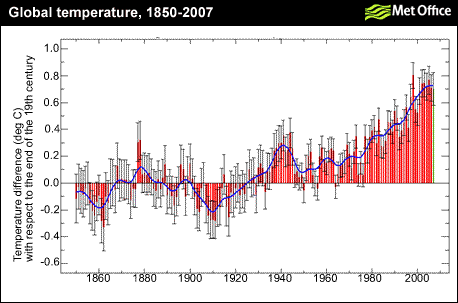
 All three major global surface temperature reconstructions show that Earth has warmed since 1880.  Most of this warming has occurred since the 1970s, with the 20 warmest years having occurred since 1981 and with all 10 of the warmest years occurring in the past 12 years.  Even though the 2000s witnessed a solar output decline resulting in an unusually deep solar minimum in 2007-2009, surface temperatures continue to increase. 


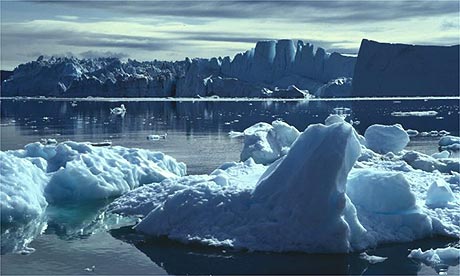
Shrinking ice sheets

The Greenland and Antarctic ice sheets have decreased in mass. Data from NASA's Gravity Recovery and Climate Experiment show Greenland lost 150 to 250 cubic kilometers (36 to 60 cubic miles) of ice per year between 2002 and 2006, while Antarctica lost about 152 cubic kilometers (36 cubic miles) of ice between 2002 and 2005.


Declining Arctic sea ice

Both the extent and thickness of Arctic sea ice has declined rapidly over the last several decades.


Glacial retreat

Glaciers are retreating almost everywhere around the world — including in the Alps, Himalayas, Andes, Rockies, Alaska and Africa.


Extreme events


Intense extratropical cyclones are often associated with extreme weather, particularly with severe windstorms. Significant increases in the number or strength of intense extratropical cyclone systems have been documented in a number of studies.In a warmer future climate, most Atmosphere-Ocean General Circulation Models project increased summer dryness and winter wetness in most parts of the northern middle and high latitudes. Summer dryness indicates a greater risk of drought. Along with the risk of drying, there is an increased chance of intense precipitation and flooding due to the greater water-holding capacity of a warmer atmosphere. This has already been observed and is projected to continue because in a warmer world, precipitation tends to be concentrated into more intense events, with longer periods of little precipitation in between. Therefore, intense and heavy downpours would be interspersed with longer relatively dry periods. Another aspect of these projected changes is that wet extremes are projected to become more severe in many areas where mean precipitation is expected to increase, and dry extremes are projected to become more severe in areas where mean precipitation is projected to decrease.


Sunday, December 18, 2011

India - Biofuel


Breathing New Fire


Self sufficiency in energy requirement is critical to the success of any growing economy. With increasing energy consumption, dependence on fossil fuels will necessarily have to be reduced. Being the fifth largest energy consumer, India imported nearly 70% of its crude oil requirement (90 million tonnes) during 2003-04. Estimates indicate that this figure would rise to 95% by 2030.

India has rich biomass resources which can be converted into renewable energy. The Planning Commission, Govt. of India, has launched an ambitious National Mission on Biodiesel to be implemented by a number of government agencies and coordinated by the Ministry of Rural Development. The Mission focuses on the cultivation of the physic nut, Jatropha curcas, a shrubby plant of the castor family. The seed contains 30-40% oil and can be mixed with diesel after trans-esterification. Initially Jatropha cultivation will be demonstrated on 0.4 m ha of wasteland area across the country. The entire cost economics is dependant on the productivity, quality and performance of the raw material. The Government is also discussing a National Biofuel Policy.

DBT has been entrusted through a micro-mission with the task of developing technologies that convert fiber, starch and sugar from woody plants and agricultural wastes into useful biofuel products. The thrust is on developing ethanol using lignocellulosic waste as raw material, identifying recombinant microbial stains for enhanced ethanol recovery, producing high quality raw material for biodiesel production and developing the enzymatic trans-esterfication process for more efficient conversion of oil to biodiesel. For the first time, a systematic scientific survey, characterization and collection of superior accessions of J.curcas from across the country has been taken up. More than 1500 accessions have been collected and characterized. Nurseries have been established at 12 locations for providing quality planting material to the National Mission. Nearly 0.8 million quality plantlets have been planted over an area of 300ha. A special focus is being given to crop improvement and on genes involved in oil biosynthesis. Other 'petro-crops' being investigated include Karanja (Pongamia pinnata), toothbrush tree (Salvadora persica) and Mahua (Madhuca indica)

With continued policy support and vigorous technology, biofuels could very soon be breathing new fire.


National Policy on Biofuels : 


http://www.mnre.gov.in/policy/biofuel-policy.pdf


http://en.wikipedia.org/wiki/Biofuel_in_India