Monday, January 14, 2013

Human Growth and Development - Prenatal Stage


Prenatal development refers to the process in which a baby develops from a single cell after conception into an embryo and later a fetus.The process of prenatal development occurs in three main stages. They are germinal stage, the embryonic stage, and the fetal stage.The first two weeks after conception are known as the germinal stage,the third through the eighth week are known as the embryonic period, and the time from the ninth week until birth is known as the fetal period.The average length of time for prenatal development to complete is 38 weeks from the date of conception.

Three Stages in Prenatal Development :

Germinal stage

Conception occurs when the female egg (ovum) is fertilized by a  male sperm. Under normal circumstances, one egg is released approximately once a month from a woman's ovary during a process called ovulation. The egg makes its way into a fallopian tube, a structure that guides the egg away from the ovary toward the uterus. For fertilization to occur, sperm ejaculated during sexual intercourse (or introduced during artificial insemination) in a substance called semen must have made their way from the vagina into the uterus and subsequently into the fallopian tube where the ovum has been released. This process can take up to ten hours after ejaculation. For fertilization to occur, a sperm must penetrate the tough outer membrane of the egg called the zona pellucida. When one sperm successfully binds with the zona pellucida, a series of chemical reactions occurs to allow only that sperm to penetrate. Fertilization occurs when the sperm successfully enters the ovum's membrane. The genetic material of the sperm and egg then combine to form a single cell called a zygote and the germinal stage of prenatal development commences.

The zygote soon begins to divide rapidly in a process called cleavage, first into two identical cells called blastomeres, which further divide to four cells, then into eight, and so on. The group of diving cells begins to move along the fallopian tube toward the uterus. About sixty hours after fertilization, approximately sixteen cells have formed to what is called a morula, still enclosed by the zona pellucida.Three days after fertilization, the morula enters the uterus. As cell division continues, a fluid-filled cavity called a blastocoele forms in the center of the group of cells, with the outer shell of cells called trophoblasts and an inner mass of cells called embryoblasts. The zona pellucida disappears and the morula becomes a blastocyst. At this stage the blastocyst consists of 200 to 300 cells and is ready for implantation. The blastocyst is made up of three layers. The three layers also known as germ layers are formed by a process called gastrulation.

Those three layers are : 

The ectoderm (which will become the skin and nervous system)
The endoderm (which will become the digestive and respiratory systems)
The mesoderm (which will become the muscle and skeletal systems)

Finally, the blastocyst arrives at the uterus and attaches to the uterine wall, a process known as implantation.

Implantation, the process in which the blastocyst implants into the uterine wall, occurs approximately six days after conception. Hormones secreted from the mother's ovaries and a chemical secreted by the trophoblasts begin to prepare the uterine wall. The blastocyst first adheres to the wall then moves into the uterine tissue.Implantation is not always an automatic and sure-fire process. Researchers estimate that approximately 58 percent of all natural conceptions never become properly implanted in the uterus, which results in the new life ending before the mother is ever aware she is pregnant.When implantation is successful, hormonal changes halt a woman’s normal menstrual cycle and cause a whole host of physical changes. Implantation marks the end of the germinal stage and the beginning of the embryonic stage.

Embryonic stage

The embryonic stage begins after implantation and lasts until eight weeks after conception. Soon after implantation, the cells continue to rapidly divide and clusters of cells begin to take on different functions (called differentiation). A process (gastrulation) leads to the formation of three distinct layers called germ layers: the ectoderm (outer layer), the mesoderm (middle layer), and the endoderm (inner layer). As the embryo develops, each germ layer differentiates into different tissues and structures. For example, the ectoderm eventually forms skin, nails, hair, brain, nervous tissue and cells, nose, sinuses, mouth, anus, tooth enamel, and other tissues. The mesoderm develops into muscles, bones, heart tissue, lungs, reproductive organs, lymphatic tissue, and other tissues. The endoderm forms the lining of lungs, bladder, digestive tract, tongue, tonsils, and other organs.The process of differentiation takes place over a period of weeks with different structures forming simultaneously.

 Some of the major events that occur during the embryonic stage are as follows:

-Week 3: Beginning development of the brain, heart, blood cells, circulatory system, spinal cord, and digestive system.
-Week 4: Beginning development of bones, facial structures, and limbs (presence of arm and leg buds); continuing development of the heart (which begins to beat), brain, and nervous tissue.
-Week 5: Beginning development of eyes, nose, kidneys, lungs; continuing development of the heart (formation of valves), brain, nervous tissue, and digestive tract.
-Week 6: Beginning development of hands, feet, and digits; continuing development of brain, heart, and circulation system.
-Week 7: Beginning development of hair follicles, nipples, eyelids, and sex organs (testes or ovaries); first formation of urine in the kidneys and first evidence of brain waves.
-Week 8: Facial features more distinct, internal organs well developed, the brain can signal for muscles to move, heart development ends, external sex organs begin to form.

 By the end of the embryonic stage, all essential external and internal structures have been formed. The embryo is now referred to as a fetus.

 Fetal stage

This period of develop begins during the ninth week and lasts until birth. Although all of the organ systems were formed during embryonic development, they continue to develop and grow during the fetal stage.The fetus continues to grow in both weight and length.This stage of prenatal development lasts the longest and is marked by amazing change and growth. During the third month of gestation, the sex organs begin to differentiate and by the end of the month all parts of the body will be formed.

When an embryo becomes a fetus at eight weeks, it is approximately 3 centimeters (1.2 inches) in length from crown to rump and weighs about 3 grams. By the time the fetus is considered full-term at 38 weeks gestation, he or she may be 50 centimeters (20 inches) or 3.3 kilograms .

Examples of some of the major features of fetal development by week are as follows:


-Weeks 9–12: The fetus reaches approximately 8 cm in length; the head is approximately half the size of the fetus. External features such as the face, neck, eyelids, limbs, digits, and genitals are well formed. The beginnings of teeth appear, and red blood cells begin to be produced in the liver. The fetus is able to make a fist.
-Weeks 13–15: The fetus reaches approximately 15 cm  in length. Fine hair called lanugo first develops on the head; structures such as the lungs, sweat glands, muscles, and bones continue to develop. The fetus is able to swallow and make sucking motions.
-Weeks 16–20: The fetus reaches approximately 20 cm in length. Lanugo begins to cover all skin surfaces, and fat begins to develop under the skin. Features such as finger and toenails, eyebrows, and eyelashes appear. The fetus becomes more active, and the mother can sometimes begin to feel fetal movements at this stage.
-Weeks 21–24: The fetus reaches approximately 28.5 cm in length and weighs approximately 0.7 kg . Hair grows longer on the head, and the eyebrows and eye lashes finish forming. The lungs continue to develop with the formation of air sac (alveoli); the eyes finish developing. A startle reflex develops at this time.
-Weeks 25–28: The fetus reaches approximately 38 cm in length and weighs approximately 1.2 kg . The next few weeks mark a period of rapid brain and nervous system development. The fetus gains greater control over movements such as opening and closing eyelids and certain body functions. The lungs have developed sufficiently that air breathing is possible.
-Weeks 29–32: The fetus reaches approximately 38–43 cm in length and weighs approximately 2 kg . Fat deposits become more pronounced under the skin. The lungs remain immature but breathing movements begin. The fetus's bones are developed but not yet hardened.
-Weeks 33–36: The fetus reaches approximately 41–48 cm in length and weighs 2.6–3.0 kg . Body fat continues to increase, lanugo begins to disappear, and fingernails are fully grown. The fetus has gained a high degree of control over body functions.
-Weeks 36–38: The fetus reaches 48–53 cm in length is considered to be full-term by the end of this period. Lanugo has mostly disappeared and is replaced with thicker hair on the head. Fingernails have grown past the tips of the fingers. In a healthy fetus, all organ systems are functioning.

While prenatal development usually follows this normal pattern, there are times when problems or deviations occur . (Details --> Click Here)

Factors influencing Growth rate

 Click Here

Prenatal Development - Videos 


Fertilization (Conception)


Weeks 1-9
 
    
Weeks 10 - 14


Weeks 15 - 20


Weeks 21 - 27


Weeks 28 - 37


Development of sexual organs


More Info :

1

2

3

4 


Sunday, January 13, 2013

Diplomacy


Diplomacy can be regarded as an application of intelligence and tact to the conduct of official relations between the governments of independent States.Diplomacy is a complex and often challenging practice of fostering relationships around the world in order to resolve issues and advance interests.The purpose of diplomacy is to strengthen the State and to serve in its relations with others. One of the functions of diplomacy is to minimize frictions and conflicts with other states through negotiations.  

Difference between Diplomacy and Foreign policy 

The terms diplomacy and foreign policy are often used interchangeably, diplomacy is an instrument of foreign policy. Foreign policy is orientated towards settling goals, occasionally with mention to the strategies and tactics to be used. Diplomacy is used to its accomplishment.

Types of Diplomacy
  • Appeasement
Appeasement is "the policy of settling international quarrels by admitting and satisfying grievances through rational negotiation and compromise, thereby avoiding the resort to an armed conflict which would be expensive, bloody, and possibly dangerous."
  • Ping Pong Diplomacy
Ping pong diplomacy refers to the exchange of ping pong players between the United States and People's Republic of China (PRC) in the 1970s. The event marked a thaw in U.S.–China relations that paved the way to a visit to Beijing by President Richard Nixon.
  • Panda Diplomacy
Panda Diplomacy is a term used to describe China's use of Giant Pandas as diplomatic gifts to other countries. The practice existed as far back as the Tang Dynasty, when Empress Wu Zetian (625 – 705AD) sent a pair of pandas to the Japanese emperor.
  • Gunboat Diplomacy
Gunboat diplomacy is the use of military troops to maintain hegemony over a sphere of influence, usually associated with the age of imperialism and colonialism.
  • Dollar diplomacy
Dollar diplomacy is a form of diplomacy that involves investing in foreign nations to stabilize them. The term is often used specifically to represent efforts conducted in self interest by the United States.dollar diplomacy in this sense of the word is diplomacy that will benefit the interests of the United States. This approach to diplomacy has been practiced for a very long time by a number of nations, not just the United States.
  • Shuttle Diplomacy
Use of a neutral third party to negotiate peace between two groups of people that refuse to directly talk with each other.Diplomatic negotiations conducted by an official intermediary who travels frequently between the nations involved.
  • Cultural Diplomacy
Cultural diplomacy is the interchange of ideas and other cultural features between nations or other distinct groups as a means of diplomacy between the groups.
  • Citizen Diplomacy
Citizen diplomacy is the concept that, in a vibrant democracy, the individual citizen has the right,even the responsibility to help shape foreign relations.In practical terms, citizen diplomats are professionals, families, students, interns, and travelers who make an impact by reaching out to individuals from other countries to build bridges of mutual understanding.
  • Public Diplomacy
Standard diplomacy might be described as the ways in which government leaders communicate with each other at the highest levels, the elite diplomacy we are all familiar with. Public diplomacy, by contrast focuses on the ways in which a country (or multi-lateral organization such as the United Nations) communicates with citizens in other societies.Public diplomacy is regarded as the framework of activities by which a government seeks to influence public attitudes in a manner that they become supportive of its foreign policy and national interests. It differs from traditional diplomacy in that public diplomacy goes beyond governments and interfaces primarily with non-governmental individuals and organizations. Furthermore, public diplomacy activities often present many differing views as represented by private individuals and organizations in addition to official Government views and positions. A key facet of Public diplomacy is that it goes beyond unidirectional communication; it is also about listening to a range of actors. Successful public diplomacy involves an active engagement with the public in a manner that builds, over a period of time, a relationship of trust and credibility. It requires systems that acknowledge the importance of an increasingly interconnected world where citizens expect responsiveness to their concerns on foreign policy (and other issues).

Film, television, music, sports, video games and other social/cultural activities are seen by public diplomacy advocates as enormously important avenues for otherwise diverse citizens to understand each other and integral to the international cultural understanding, which they state is a key goal of modern public diplomacy strategy. It involves not only shaping the message(s) that a country wishes to present abroad, but also analyzing and understanding the ways that the message is interpreted by diverse societies and developing the tools of listening and conversation as well as the tools of persuasion.
  • Economic diplomacy
Economic diplomacy is concerned with economic policy issues. Economic diplomats also monitor and report on economic policies in foreign countries and offer advice to the home government on how best to influence them. Economic diplomacy engages contacts with foreign and sending states’ institutions, businesses and international organizations to advance the sending state’s economic interests,seeks to resolve bilateral trade disputes and negotiate with trading partners to liberalize world trade.
  • Multi-Track Diplomacy
Multitrack Diplomacy is an expansion of the original distinction made by Joseph Montville in 1982, between track one (official, governmental action) and track two (unofficial, nongovernmental action) approaches to conflict resolution.The nine tracks of diplomacy included in Multi-Track Diplomacy are:

Track 1 – Government
Track 2 – Non-government/Professional
Track 3 – Business, or Peacemaking through Commerce.
Track 4 – Private Citizen, or Peacemaking through Personal Involvement.
Track 5 – Research, Training, and Education
Track 6 – Activism, or Peacemaking through Advocacy
Track 7 – Religion, or Peacemaking through Faith in action.
Track 8 – Funding, or Peacemaking through Providing Resources.
Track 9 – Communications and the Media, or Peacemaking through Information


Other Classification :

Type of diplomacy based on number of parties involved - bilateral diplomacy or diplomacy between two states (i.e. diplomatic representation of the sending state in a receiving state), multilateral diplomacy which involves diplomacy regarding regional or global issues and is used with a plurality of States through an international organization or at international conferences, and ad hoc diplomacy which involves other forms of diplomacy than the two aforementioned types of diplomacy. For example one can think of special missions to which States resort in order to entrust a diplomatic officer with the task to carry out one or many diplomatic assignments in a foreign State even though this officer does not belong to a permanent mission accredited to a country. 

Tools of Diplomacy

Various processes and procedures have evolved over time for handling diplomatic issues and disputes:

Arbitration and mediations

Nations sometimes resort to international arbitration when faced with a specific question or point of contention in need of resolution. For most of history, there were no official or formal procedures for such proceedings. They were generally accepted to abide by general principles and protocols related to international law and justice.Sometimes these took the form of formal arbitrations and mediations. In such cases a commission of diplomats might be convened to hear all sides of an issue, and to come some sort of ruling based on international law.In the modern era, much of this work is often carried out by the International Court of Justice at The Hague, or other formal commissions, agencies and tribunals, working under the United Nations.Below are some examples.

Hay-Herbert Treaty Enacted after the United States and Britain submitted a dispute to international mediation about the US-Canadian border.

Pakistan's complaint that the Baghlihar project has violated the Indus Treaty was being examined by Swiss water expert Raymond Lafitte, who has been appointed as an arbitrator with the consent of both the countries.

Conferences

Other times, resolutions were sought through the convening of international conferences. In such cases, there are fewer ground rules, and fewer formal applications of international law.However, participants are expected to guide themselves through principles of international fairness, logic, and protocol.Some examples of these formal conferences are:

Congress of Vienna (1815) – After Napoleon was defeated, there were many diplomatic questions waiting to be resolved. This included the shape of the map of Europe, the disposition of political and nationalist claims of various ethnic groups and nationalities wishing to have some political autonomy, and the resolution of various claims by various European powers.

The Congress of Berlin (June 13 – July 13, 1878) was a meeting of the European Great Powers' and the Ottoman Empire's leading statesmen in Berlin in 1878. In the wake of the Russo-Turkish War, 1877–78, the meeting's aim was to reorganize conditions in the Balkans.

Negotiations

Sometimes nations convene official negotiation processes to settle an issue or dispute between several nations which are parties to a dispute. These are similar to the conferences mentioned above, as there are technically no established rules or procedures. However, there are general principles and precedents which help define a course for such proceedings.Some examples are:

Camp David accord Convened in 1978 by President Jimmy Carter of the United States, at Camp David to reach an agreement between Prime Minister Mechaem Begin of Israel and President Anwar Sadat of Egypt. After weeks of negotiation, agreement was reached and the accords were signed, later leading directly to the Israel-Egypt Peace Treaty of 1979.

Treaty of Portsmouth Enacted after President Theodore Roosevelt brought together the delegates from Russia and Japan, to settle the Russo-Japanese War. Roosevelt's personal intervention settled the conflict, and caused him to win the Nobel peace prize.

The outcomes of diplomacy are usually spelled out through the following instruments: 

Treaties : A treaty is an agreement under international law where the parties to it  namely sovereign states and international organizations negotiate to reach common ground and avoid further conflict or disagreement 

Conventions : A convention begins as an international meeting of representatives from many nations that results in general agreement about procedures or actions they will take on specific topics.It include many signatories and the original signatories encourage other countries to join long after the original agreement is reached.Ex : In 1973, representatives of 80 countries agreed on a Convention on International Trade in Endangered Species to protect rare plants and animals around the world.

Protocols : A protocol is an agreement that diplomatic negotiators formulate and sign as the basis for a final convention or treaty. The treaty itself may not be completed for many years.

Accords : An accord is an agreement but may not be legally binding where as treaty is a legally binding agreement

Alliances: An alliance is a pact, coalition or friendship between two or more parties, made in order to advance common goals and to secure common interests. It is a Political agreement between countries to support each other in disputes with other countries.

Diplomat 

A diplomat is a person appointed by a state to conduct diplomacy with another state or international organization. The main functions of diplomats revolve around the representation and protection of the  interests and nationals of the sending state, as well as the promotion of information and friendly relations.According to the Vienna Convention some of the roles of diplomat are as follows:
  1. The representation of state socially, politically and ceremonially in other countries.
  2. The protection of states interest, overseas nationals and states commercial activities.
  3. Negotiations on behalf of government and signing of agreements.
  4. Information gathering of states activities externally, and in missionary cases, gathering information from host countries.
  5. The promotion of cordial and friendly relations in the international system.
  6. Diplomats also create relationships and maintain good level of communication between external affairs and internal structures 
Types of Diplomatic Missions

A country may have several different types of diplomatic missions in another country.

Embassy -- A diplomatic mission located in the capital city of another country which generally offer a full range of services, including consular services.

High Commission -- An embassy of a Commonwealth country located in another Commonwealth country.

Permanent Mission -- A diplomatic mission to a major international organization.

Consulate General -- A diplomatic mission located in a major city, other than the capital city, which provides a full range of services, including consular services.

Consulate -- A diplomatic mission that is similar to a consulate general, but which does not provide a full range of services.

Consulate Headed by Honorary Consul  -- A diplomatic mission headed by an Honorary Consul which provides only a limited range of services.

More Info : Indian Diplomacy 


Sunday, December 30, 2012

Earth : Making of a Planet


Planet earth and the history behind its evolution to the modern day form carries with in lots of amazing and astonishing facts. Earth did not turn up the way it is in just a single day. Millions of years of evolution stand behind earth in its present form. All possible research has been made to discover the earth’s  past and more is being done. Buried civilization and remains of primitive signs of life help earth scientist to join the knots and formulate the overall picture. Each and every aspect of planet earth has been developing since its creation and even before its creation.

Theories of evolution of human and planet earth bring out amazing facts which remain unbelievable for a normal human being. Lots of species and places have been swallowed by the planet earth. Deep in the remains of earth and waters remain the signs of human evolution and some of the signs have been eaten away and human can just think of their probability. Dinosaurs are one such specie that most of us have heard of and at the same time we also believe in. Making of our wonderland did not happen in just a single day.If we could just gather the facts and take our imagination to the path of history, we will come across the earth that we may not even believe in. Evolved through the big bang and coming into its primitive existence with such violent and sudden manner was not something that earth could itself have controlled. Earth has gone through ice age, volcanic eruptions and emissions and much more that we as humans find hard to imagine and it would have been even worse for us to be present at that time. Just imagine living in the Stone Age with no technological advancement and so much of hardship around.

The history of our planet is an epic journey-from its birth out of cosmic rubble to the unique complex of land, sea, atmosphere and life we know now.This National Geographic film takes a photographic journey thorough time from the violent birth of our planet earth, four and a half billion years ago, through ice-ages, massive volcanic eruptions and the dinosaur's reign to the first humans.Go back to five billion years ago and discover the birth of the Earth that is the only home to life as far as we know, see how life flourished and evolution worked, from the first single-celled organism to age of the dinosaurs and the first humans who walked on the planet, through the dazzling images and CGI animations. 


Dances of India


Dance in India has a rich and vital tradition dating back to ancient times.The Indian dances are broadly divided into Classical dances and folk dances.The Classical dances of India are usually spiritual and religious in content.Indian Classical dance is also known as the traditional Indian dance which has abundant forms and takes human figure as its basic medium of expressions. Like the Indian culture, Indian classical dances are equally diverse in nature.The folk dances of India are also spiritual and religious in content but the main force behind the folk dances of India is the celebratory mood.There are numerous classical dance forms in India and innumerable folk dances.Each dance form can be traced to different parts of the country. Each form represents the culture and ethos of a particular region or a group of people.

Classical Dances


India has a very rich tradition of classical dance. Each form has its own specialty & grace, along with a set pattern of costumes & make-up.Indian classical dance is a relatively new umbrella term for various codified art forms rooted in Natya, the sacred Hindu musical theatre styles, whose theory can be traced back to the Natya Shastra of Bharata Muni (2nd century BC).Even though the art of Natya includes nritta, or dance proper, Natya has never been limited to dancing and includes singing, abhinaya (mime acting). These features are common to all the Indian classical styles.The foundation of the conventions and methodical movements and types of dance lies in an ancient book of dance, music and drama called Natyashastra.

According to a popular belief, Brahma, the Creator of the World, combined literature from the Rig Veda, songs from the Sama Veda, abhinaya (expression) from the Yajur Veda and rasa (aesthetic experience) from the Atharva Veda, to form natyashastra .It has has over 36,000 verses. Natyashastra is also known as fifth veda.It explains the nuances of dance, giving stress on mudras (hand formations) and their meanings, the kind of emotions and their categorization.Apart from the abhinaya and the performance of rasa, the audience is amused by the attire and ornaments of the artist. The majority of Indian classical dance forms are focused on the depiction of the nine rasas (Navarasas or the emotions), which includes Hasya (happiness), Krodha (anger), Bhibasta (disgust), Bhaya (fear), Shoka (sorrow), Viram (courage), Karuna (compassion), Adbhuta (wonder) and Shanta (serenity). 

As per the ancient treatises, dance is considered as having three aspects: natya, nritya and nritta. Natya highlights the dramatic element and most dance forms do not give emphasis to this aspect today with the exception of dance-drama forms like Kathakali. Nritya is essentially expressional, performed specifically to convey the meaning of a theme or idea. Nritta on the other hand, is pure dance where body movements do not express any mood (bhava), nor do they convey any meaning. To present nritya and natya effectively, a dancer should be trained to communicate the navarasas.

Sangeet Natak Akademi, the national academy for performing arts, recognizes eight distinctive traditional dances as Indian classical dances, which might have origin in religious activities of distant past.They are:

1.       Bharatanatyam - Tamil Classical Dance
2.       Odissi - Orrisa Classical dance
3.       Kathakali - Malayalam Classical Dance
4.       Kathak - North Indian Classical Dance
5.       Manipuri - Manipur Classical Dance
6.       Kuchipudi - Telugu Classical dance
7.       Mohiniaattam - Kerala Classical Dance
8.       Sattriya - Asamese Classical Dance


From the Natya Shastra, 3 religious dance/drama forms developed:

Agama Nartanam:  Dances performed inside the sanctum of the temple according to the ritual.  This was a spiritual dance form.
Carnatakam: Dances performed in royal courts to the accompaniment of classical music.  This was an intellectual art form. 
Darbari Aattam: Dances performed more for common Indians which educated them about their religion, culture and social life. These dances were performed outside the temple precincts in the courtyards.

A dance style is classical to the extent it incorporates the Natya Shastra techniques. Some of the styles such as Kathak use very few elements found in Natya Shastra. Other art dances yet to be conferred as classical dances, whose theories and techniques can also be traced back to the Natya Shastra are:

Andhra Natyam - Telugu art dance
Vilasini Nrityam/Natyam - Telugu art dance
Kerala Natanam - Kerala classical dance

Out of the eight recognized dance forms, the only two temple dance styles that have their origin in Natya Shastra and are prescribed by the Agamas are Bharata Natyam and Odissi. These two most faithfully adhere to the Natya Shastra but currently do not include Vaachikaabhinaya (dialog acts), although some styles of Bharata Natyam, such as Melattur style, prescribe the lip and eye movements indicating Vaachikaabhinaya.

Kuchipudi, which also prescribes the lip movements indicating Vaachikaabhinaya, and Mohiniyattam are relatively recent Darbari Aatam forms, just as Kathakali, and two eastern Indian styles, Manipuri and Sattriya, that are quite similar.

Kathak originated as a court dance. Some believe it evolved from Lord Krishna's raas lilas, forms of which have also evolved into the popular Garba-style dances popular in North India and Gujarat. The style gradually changed during the Mughal period under the influence of Persian dance, a major change being straight knees instead of the bent knees used in most other Indian classical forms. Intricate footwork and spins, as well as abhinaya, are the highlights of Kathak.

Currently, Sangeet Natak Akademi does not consider the recently reconstructed dance styles of Andhra Pradesh such as Andhra Natyam and Vilasini Natyam as "classical." Bharatanrithyam, despite being the one most closely following Natya Shastra's precepts, is considered as a variety of Bharata Natyam.


Folk Dances


Folk dance in India is a term broadly used to describe all forms of folk and tribal dances in regions across India(These types of dances can be categorised into two major categories: Folk and Tribal dances).Folk dances are numerous in number and style, and vary according to the local tradition of the respective state, ethnic or geographic regions. There are cultural differences between the two forms- folk and tribal dances- the folk dances are the rural extensions of the larger Indian population for example Bhangra of Punjab and Garba of Gujarat. However, the tribal dances are dances by adivasis, which have a very different culture from the larger Indian population. It may be noted here that Indian tribal dances are vastly dissimilar from Indian folk dances, which can never be related. A common example of a tribal dance is the Santhali Dance, indigenous from Chottanagpur region. Other tribal dances of India include the Dhimsa dance by Oriya tribes, the Dhimsa dance, yet another tribal dance from Andhra Pradesh, the Nagaland tribal dances,etc. Each of these aboriginal tribes possesses its own distinguishable dance traditions and invariably all of them are interwoven with the life of the people who dance it.

Indian Folk dances have originated with a view to be a creation of different socio-economic set up and traditions. While Indian classical dance is considered a higher form of art and was practiced in courts, temples and on special occasions, folk dance forms are practiced in groups in rural areas as an expression of their daily work and rituals.  Indian folk as well as tribal dances are simple and performed to express joy and performed to celebrate a season, festivals and so on. Its simplicity is shown by its less movement and uncomplicated steps.Some of the popular folk dances that are performed across villages and cities are Bhangra, Garba, Kalbelia and Bihu.Many folk dances are devoted to the presiding God of the specific community. The most appealing element of a folk dance is the requisite outfit for its performance. In Indian Folk Dances the accessories play a vital role, these costumes provide a separate identity to the folk dance. Many a time, folk dances are termed as per the name of the accessory used.

Almost all the regions of the country have their specific folk music and dance, which proves to be a wonderful way of expression of their community and its traditions. Though these folk dances are not as complex as the classical dance forms, they are very beautiful, because of the essence of rawness in them. Folk dances are performed for every possible occasion, to celebrate the arrival of seasons, birth of a child, a wedding and festivals. The folk dances are extremely simple with minimum of steps or movement. Indian folk dances are full of energy and vitality. Some dances are performed separately by men and women while in some performances men and women dance together. On most occasions, the dancers sing themselves, accompanied by artists with instruments. Each form of folk dance has a specific costume and rhythm. Most of the costumes, worn for folk dances, are colorful with extensive jewels and designs.


List of Indian Folk Dances -- Click Here


More Details : Click


Saturday, December 29, 2012

Ten biggest scientific breakthroughs of 2012

 Higgs Boson


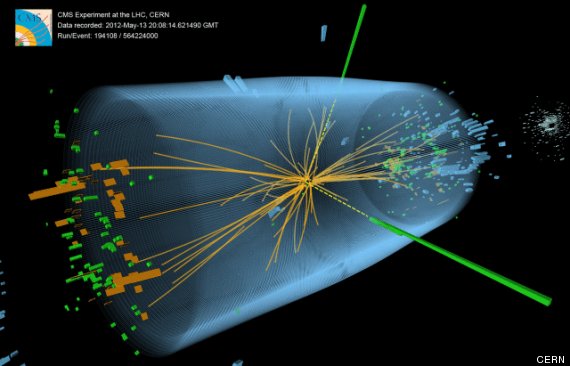
The capture of the most wanted sub-atomic particle in physics was today named as Science journal's Biggest Breakthrough of the Year.Scientists had been chasing the Higgs boson, nicknamed the 'God particle' for more than four decades. In July the team from the European nuclear research facility at Cern in Geneva announced the detection of a particle that fitted the description of the elusive Higgs.The boson is believed to give matter mass via an associated 'Higgs field' that permeates space. Without the property of mass, the universe we live in could not exist. Scientists used the world's biggest atom smashing machine, the £2.6billion Large Hadron Collider on the Swiss-French border, to track down the missing particle.Finding the Higgs topped the list of most important discoveries of 2012 released today by Science, one of the world's most prestigious scientific journals.

The Denisovan Genome
 
 
Scientists sequenced the DNA blueprint of the Denisovans, an extinct species of human that lived alongside Neanderthals and the ancestors of people living today.

Making Eggs From Stem Cells
 
 
Japanese researchers showed that embryonic stem cells from mice could be coaxed into becoming viable egg cells.

Curiosity's Landing System
 
 
Mission engineers at the American space agency NASA safely and precisely placed the Curiosity rover on the surface of Mars. They used a 'sky crane' that dropped the 3.3 ton rover to the surface from a hovering platform on three cables.

X-ray Laser Provides Protein Structure
 
 
Researchers used an X-ray laser, which shines a billion times brighter than traditional synchrotron sources, to determine the structure of an enzyme required by the parasite that causes African sleeping sickness.

Precision Engineering of Genomes


 The revision and deletion of DNA in higher organisms has generally been hit-or-miss. In 2012, a tool known as TALENs, which stands for 'transcription activator-like effector nucleases,' allowed scientists to alter or inactivate specific genes in animals such as zebra fish and toads, and cells from patients with disease.

Majorana Fermions
 
 
The existence of Majorana fermions, particles that act as their own antimatter and annihilate themselves, has been debated for more than seven decades. This year, a team of physicists and chemists in the Netherlands provided the first solid evidence that such exotic matter exists, in the form of quasi-particles. These are groups of interacting electrons that behave like single particles.
 

The ENCODE Project


A decade-long study reported this year in more than 30 papers revealed that the human genetic code is more functional than researchers had believed. Although just 2% of the genome codes for actual proteins, the Encyclopaedia of DNA Elements, or ENCODE, project indicated that about 80% of it is active in ways such as helping to switch genes on or off.

Brain-Machine Interfaces
 
 
Scientists showed that paralysed human patients could move a mechanical arm with their minds and perform complex movements in three dimensions.

Neutrino Mixing Angle
 
 
Hundreds of researchers working on the Daya Bay Reactor Neutrino Experiment in China found the last part of the jigsaw describing how particles known as neutrinos morph from one strain or 'flavour' to another as they travel at near-light speed. daily times monitor

The Space Race


 The race between two defiant superpowers for supremacy over the outer space is also a secret battle between two extraordinary men.

The story of the race into space is marked by the greatest superpower rivalries, political paranoia, and technological feats of the twentieth century. But until now, we have only known half the story. With the end of the Cold War, a generation of secrets and cover-ups has been revealed.This is the true story about the American and Soviet space race led by Wernher von Braun and Sergei Korolev. The two men, thousands of miles apart, battled for the same goals.The documentary shows how Americans chief rocket designer, ex-Nazi Wernher von Braun  was hurriedly white-washed by the US to lead the way, against the obscure Russian engineer Sergei Korolev - a genius known only as the 'Chief Designer' - whose story has long remained a mystery. Both were men of their times, but with visions that were timeless. And both were prepared to go to extraordinary lengths to see the fulfilment of their dreams. The world watched as the American and Soviet teams, impervious to disaster, took the fight for the coveted prize right up to the wire....


Financial Inclusion


Financial inclusion or inclusive financing is the delivery of financial services, at affordable costs, to sections of disadvantaged and low income segments of society.Financial inclusion refers to the strategy adopted to make banking activities and its benefits reach the unbanked areas. It is a drive to bring the unprivileged people at par with the mainstream. It is argued that as banking services are in the nature of public good; the availability of banking and payment services to the entire population without discrimination is the prime objective of this public policy. The term "financial inclusion" has gained importance since the early 2000s, and is a result of findings about financial exclusion and its direct correlation to poverty. Financial inclusion is now a common objective for many central banks among the developing nations.

Need for Financial Inclusion

The Indian economy is the second fastest growing economy in the world. Majority of the population in India resides in rural areas. Thus development of rural India is a key step towards economic development for a country like ours.Credit is one of the very important inputs of economic development. The timely availability of credit at an affordable cost has a big role to play in contributing to the well being of the weaker sections of the society. Proper access to finance by the rural people is a key requisite to employment, economic growth and poverty reduction which are primary tools of economic development.

India has a huge network of institutional credit. Institutional credit refers to credit offered by financial institutions like banks. The Indian financial system is considered to be one of the finest systems in the world. It is only because of the strong grip of the financial system that even the global financial crisis could not affect India that severely.In spite of having such a strong financial system it has been evident that financial awareness has not been able to penetrate into the rural sections of the society. Non institutional credit givers in the form of money lenders still continue to grasp the poor in their clutches. This is a matter of concern and proper action needs to be taken for the same.

Credit can be penetrated into rural India through appropriate banking channels. The Indian banking industry has shown tremendous growth in the last few decades. But despite such growth, the banks have been unable to reach a vast segment of the Indian population causing financial exclusion. This void ultimately led to the emergence of policy for financial inclusion.

People residing in rural areas where banking facilities have not yet touched foot are unaware of the benefits of financial services. Finance is an integral part of every life. Managing the hard earned money so that it grows to yield more money is very important. But people who are financially unaware often fall prey in the hands of greedy money lenders. These money lenders take undue advantage of the ignorant people and they fall in debt trap that lasts for not only their life but for generations to come.  
  •  It is now widely acknowledged that financial exclusion leads to non accessibility, non-affordability and non-availability of financial products. Limited access to funds in an underdeveloped financial system restricts the availability of their own funds to individuals and also leads to high cost credit from informal sources such as moneylenders.
  • Due to lack of access to a bank account and remittance facilities, the individual pays higher charges for basic financial transactions.
  • Absence of bank account also leads to security threat and loss of interest by holding cash. All these impose real costs on individuals.
  • Prolonged and persistent deprivation of banking services to a large segment of the population leads to a decline in investment and has the potential to fuel social tensions causing social exclusion.
Thus, financial inclusion is an explicit strategy for accelerated economic growth and is considered to be critical for achieving inclusive growth in the country.

Extent of Financial Exclusion in India

In India, almost half the country is unbanked.Only 55 per cent of the population has deposit accounts and 9 per cent have credit accounts with banks. India has the highest number of households (145 million) excluded from Banking. There was only one bank branch per 14,000 people.In 6 lakh villages in India, rural branches of Schedule Commercial Banks including Regional Rural Banks number 33,495 only.Only a little less than 20% of the population has any kind of life insurance and 9.6%  of the population has non‐life insurance coverage.Just 18 per cent had debit cards and less than 2 per cent has credit cards.

 Reasons for Financial Exclusion 

(i) Geographical Location
  • remoteness of residence,hilly & sparsely populated areas with poor infrastructure & difficult physical access.
  • distance from bank branch
  • branch timings
(ii) Economic Factors
  • low income
  • low assets
(iii) Social Factors
  •  ease of availability of informal credit
  •  culture
  •  Gender
(iv) Financial illiteracy
  •  illiteracy
  •  lack of awareness
(v) Documentation Process
  • Cumbersome
  •  KYC – documentary proof of identity/ address
(vi) Inefficiency of the financial Institutions
  •  high cost of operations
  •  less volume & more number of clients
  •  unsuitable products
  •  language
  •  staff attitude
  •  poor functioning and financial health of some financial institutions (such as financial cooperatives) which limit the effectiveness of their outreach figures.
  •  Primary Agricultural Cooperative Societies (PACS), which restrict their membership to persons with land ownership are also not effective in offering savings services.

Consequences of Financial Exclusion 

  • Affects individuals and economy alike
  • The households, micro and small enterprises dealing entirely in cash are susceptible to irregular cash flows would be affected
  • Limits options for providing for old age security
  • Recourse to informal lenders
  • Exposed to higher interest rates charged by informal lender
  • Highest risk as loans are often secured against the borrower’s property
  • Banking with informal sources does not provide interest benefit and tax advantages and are far less secure

Benefits of Financial Inclusion 

Financial inclusion does not restrict itself to credit. It includes financial awareness, knowledge about banks and banking channels, facilities provided by banks and the advantages of using the banking route. It involves educating people financially; making them financially literate.

Inclusive financial system allows poor households to save and manage their money in a secure manner, decreases their exposure to economic shocks in the form of drought, floods or any calamity of the kind which affects people dependant on agricultural activities.

An important measure of financial inclusion is to check the number of people who own a bank account. A person holding a bank account is considered to have elementary banking knowledge. Thus a count of the number of bank accounts gives an idea of the percentage of people who are aware of banking and what percentage still needs to be included. However financial inclusion does not end with opening of bank accounts. It has to be a continuous effort.

Steps taken so far to eliminate financial exclusion 
  • Focus on Inclusive Growth
  • Improving Banking Technology
  • The Indian Way- Multi Agency Approach
  • Financial Stability and Development Council (FSDC) mandated to focus on Financial Inclusion and Financial Literacy
  • Financial Sector Regulators including the Reserve Bank committed to FI Mission
  • Financial services through mainstream financial institutions to 6 lakh villages
  • ​Banking Correspondent Model
The drive for financial inclusion has been started in India by the monetary regulator, Reserve Bank of India.The Reserve Bank of India has initiated several policy measures to ensure financial inclusion and increase the outreach of the banking sector. A major initiative taken by the Bank in this direction is the introduction of the business correspondent model.Under this model RBI has permitted banks to use the services of intermediaries such as business facilitators and correspondents to provide banking services for ensuring greater financial inclusion and increasing the outreach of the banking sector.
 
By using the Information Technology  the banking services in the rural areas are being improved

What has been done so far?

  • ICT based Business Correspondent (BC) Model for low cost door step banking services in remote villages .
  • RBI Board approved Financial Inclusion Plans (FIPs) of banks for 3 years, starting April 2010.Roadmap to cover villages of above 2000 population by march 2012
  • Availability of minimum four banking products through ICT model has been ensured
  • Mandatory opening of 25 % of new branches in unbanked rural centers.
  • KYC documentation requirements significantly simplified for small account
  • Guidelines for convergence between Electronic Benefit Transfer and FIP have been issued.
  • Pricing for banks totally freed . Interest rates on advances totally deregulated.
Approach adopted by RBI:
  • Achieving planned, sustained and structured Financial inclusion.
  • Technology-To be fixed first
  •  ​All Bank branches must be on Core Banking Solution (CBS). All Regional Rural Banks (RRBs) to be on CBS by September 2011.
  •  Multi-channel approach (Handheld devices, mobiles, cards, Micro-ATMs, Branches, Kiosks, etc.)
  •  Front-end devices transactions must be seamlessly integrated with the banks’ CBS.
  • Coverage- Ensuring Transparency 


Important Info: