Sunday, January 22, 2012

IUCN Red List


The IUCN ( International Union for Conservation of Nature ) Red List System was first conceived in 1963 and set a standard for species listing and conservation assessment efforts. The IUCN Red List is the world's most comprehensive inventory of the global conservation status of plant and animal species. It uses a set of criteria to evaluate the extinction risk of thousands of species and subspecies. These criteria are relevant to all species and all regions of the world. With its strong scientific base, the IUCN Red List is recognized as the most authoritative guide to the status of biological diversity.

The overall aim of the Red List is to convey the urgency and scale of conservation problems to the public and policy makers, and to motivate the global community to try to reduce species extinctions.

Who uses the IUCN Red List?

The Red List is used by government agencies, wildlife departments, conservation-related non-governmental organizations (NGOs), natural resource planners, educational organizations, and many others interested in reversing, or at least halting the decline in biodiversity.

Uses of the IUCN Red List
  • Draws attention to the magnitude and importance of threatened biodiversity
  • Identifies and documents those species most in need of conservation action
  • Provides a global index of the decline of biodiversity
  • Establishes a baseline from which to monitor the future status of species
  • Provides information to help establish conservation priorities at the local level and guide conservation action
  • Helps influence national and international policy, and provides information to international agreements such as the Convention on Biological Diversity (CBD) and the Convention on International Trade in Endangered Species of Wild Fauna and Flora (CITES).

How is the IUCN Red List compiled?

There are nine categories in the IUCN Red List system:
  1. Extinct
  2. Extinct in the Wild
  3. Critically Endangered
  4. Endangered
  5. Vulnerable
  6. Near Threatened
  7. Least Concern
  8. Data Deficient
  9. Not Evaluated.
Classification into the categories for species threatened with extinction (Vulnerable, Endangered, and Critically Endangered) is through a set of five quantitative criteria that form the heart of the system. These criteria are based on biological factors related to extinction risk and include: rate of decline, population size, area of geographic distribution, and degree of population and distribution fragmentation.

 Categories:

EXTINCT (EX)
 A taxon ( group of organisms) is Extinct when there is no reasonable doubt that the last individual has died. A taxon is presumed Extinct when exhaustive surveys in known and/or expected habitat, at appropriate times (diurnal, seasonal, annual), throughout its historic range have failed to record an individual. Surveys should be over a time frame appropriate to the taxon's life cycle and life form.

EXTINCT IN THE WILD (EW)
A taxon is Extinct in the Wild when it is known only to survive in cultivation, in captivity or as a naturalized population (or populations) well outside the past range. A taxon is presumed Extinct in the Wild when exhaustive surveys in known and/or expected habitat, at appropriate times (diurnal, seasonal, annual), throughout its historic range have failed to record an individual. Surveys should be over a time frame appropriate to the taxon's life cycle and life form.

CRITICALLY ENDANGERED (CR)
A taxon is Critically Endangered when the best available evidence indicates that it meets any of the criteria A to E for Critically Endangered (see Red List Categories and Criteria booklet for details) and it is therefore considered to be facing an extremely high risk of extinction in the wild.

ENDANGERED (EN)
A taxon is Endangered when the best available evidence indicates that it meets any of the criteria A to E for Endangered (see Red List Categories and Criteria booklet for details), and it is therefore considered to be facing a very high risk of extinction in the wild.

VULNERABLE (VU)
A taxon is Vulnerable when the best available evidence indicates that it meets any of the criteria A to E for Vulnerable (see Red List Categories and Criteria booklet for details), and it is therefore considered to be facing a high risk of extinction in the wild.

NEAR THREATENED (NT)
A taxon is Near Threatened when it has been evaluated against the criteria but does not qualify for Critically Endangered, Endangered or Vulnerable now, but is close to qualifying for, or is likely to qualify for, a threatened category in the near future.

LEAST CONCERN (LC)
A taxon is Least Concern when it has been evaluated against the criteria and does not qualify for Critically Endangered, Endangered, Vulnerable or Near Threatened. Widespread and abundant taxa are included in this category.

DATA DEFICIENT (DD)
A taxon is Data Deficient when there is inadequate information to make a direct, or indirect, assessment of its risk of extinction based on its distribution and/or population status. A taxon in this category may be well studied, and its biology well known, but appropriate data on abundance and/or distribution are lacking. Data Deficient is therefore not a category of threat. Listing of taxa in this category indicates that more information is required and acknowledges the possibility that future research will show that threatened classification is appropriate. It is important to make positive use of whatever data are available. In many cases great care should be exercised in choosing between DD and a threatened status. If the range of a taxon is suspected to be relatively circumscribed, and a considerable period of time has elapsed since the last record of the taxon, threatened status may well be justified.

NOT EVALUATED (NE)
A taxon is Not Evaluated when it is has not yet been evaluated against the criteria.


CLICK --- Critically Endangered Species of India


Tuesday, January 10, 2012

Indus Valley Civilization


The earliest traces of civilization in the Indian subcontinent are to be found in places along, or close, to the Indus river. Excavations first conducted in 1921-22, in the ancient cities of Harappa and Mohenjodaro  pointed to a highly complex civilization that first developed some 4,500-5,000 years ago, and subsequent archaeological and historical research has now furnished us with a more detailed picture of the Indus Valley Civilization and its inhabitants. Though the Indus Valley script remains undeciphered down to the present day, the numerous seals discovered during the excavations, as well as statuary ,pottery and skeletal remains, not to mention the ruins of numerous Indus Valley cities, have enabled scholars to construct a reasonably plausible account of the Indus Valley Civilization.

How big was the Indus civilisation?

The Indus Valley civilisation was  four times bigger than Britain! There were more than 1,400 towns and cities. The biggest cities were Harappa and Mohenjo-Daro. Each city had as many as 80,000 people.There were lots of smaller cities, such as Lothal, Dholavira, Kalibangan and Banawali. These names of these cities were given in later times. We do not know what the Indus people themselves called their cities.


Map of Indus Valley Civilization :


What were Indus cities like?

The Indus Valley Civilization (IVC) was a Bronze Age civilization .An Indus city was made of mud-brick buildings. It had walls and roads.Indus Valley Civilization had elaborated town planning and it followed the Grid System. Water was very important to Indus people, so the builders started by digging wells, and laying drains. Main streets were up to 10 metres wide, wide enough for carts to pass. Side streets were narrow, more like alleys.Some cities had a citadel high on a mound. In the citadel were bigger buildings. Perhaps the city's rulers lived there. Most people lived and worked in the lower part of town.Most Indus people did not live in cities at all. Perhaps 9 out of 10 people were farmers and traders who lived in small villages.

All Indus Valley bricks were the same ratio of 1 : 2 : 4 but came in different sizes. A common size was 7 cm high x 14 cm wide x 28 cm long. Bricks were laid in rows or 'courses', end to end and crossways, using wet mud as cement to stick the bricks together. Indus Valley walls were so strong that many have stood for over 4,000 years!

Indus Valley people had clean water and excellent drains - better than any other ancient civilisation. Most city homes had a bathroom and toilet, connected to the city drains. Some people had private wells, for clean water. Others went to public wells, to fetch water in jars or animal- skin bags. Waste water flowed out of the house through pipes into the street-drains. Workers cleaned the drains and emptied the pits where sewage from toilets collected.


Great Bath - Mohanjedaro


An Indus city house :

An Indus Valley house was cool inside. Thick walls kept people cool in the heat of summer. Some houses had just one room. Big houses had lots of rooms arranged around a central courtyard. There were no windows onto the main street. This kept out dust and noise. Side windows let in light and air. From a model house found at Harappa, we can see that windows may have had wooden shutters with grilles (barred openings) to let in air and light. All that are left today are the ground floors of houses that once had two or three floors. Stairs led to the upper floors and roof. Walls were covered with mud plaster. It is not clear if people painted the walls.

Most people living in an Indus city had small homes which were also used as workshops. There was not much space to relax. For richer families, the courtyard was a pleasant, airy space, open to the sky. Children could play there, with toys and with pets such as monkeys, dogs and birds. People could tend plants in pots, and enjoy the air. In the courtyard, a rich family had its own private well, for water. The very rich lived in grand houses with more than one courtyard, and 30 to 40 rooms.

People of Indus valley Civilization :

Anthropological investigation and examination of the human remains shows that four racial types existed in this civilization. They were the proto - Australiod, Mediterranean, Alpine and the Mongoloid. Archaeological excavation reveal the existence of various racial types. Of all these the existence of the Dravidian race holds its relevance owing to its wide spread acceptance. Scholars are differed in their opinion about the race of Indus people. Some say it is of the Aryans while others opine that it is of the Dravidians. From this analysis on Indus Valley Civilization, scholars believes that it is the Dravidians who were the original inhabitants of Indus valley civilization.

Religion and Gods of Indus Valley People :

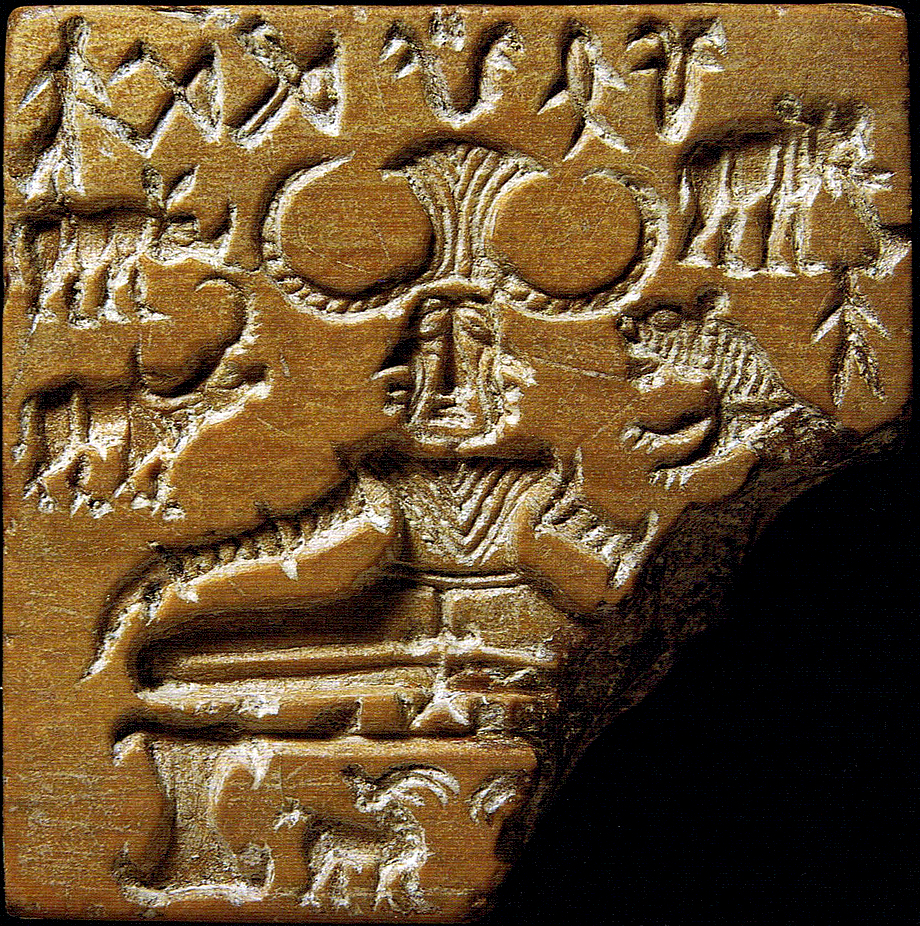
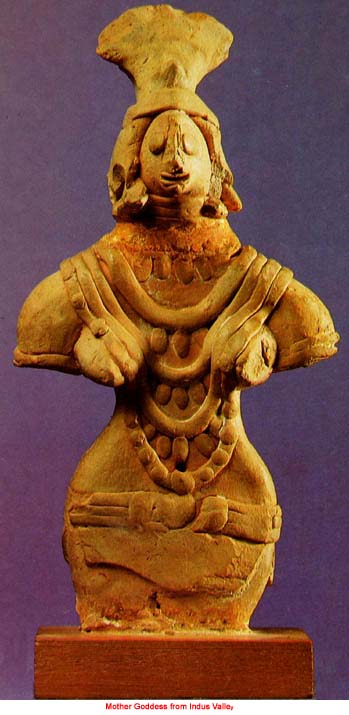
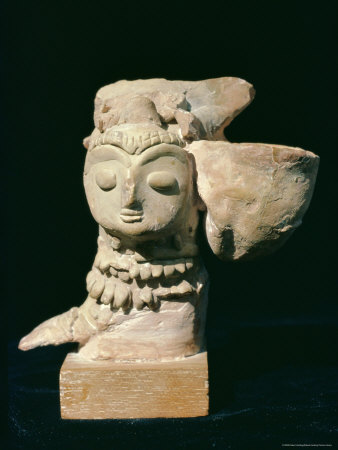
Unlike Mesopotamia or Egypt, there were no such buildings discovered so that we can conclude it might be a temple or involve any kind of public worship.Pictures on seals and other artefacts show what look like figures of gods. Various figures of the Mother Goddess were found. People probably believed this goddess gave health and fertility to people, animals and plants.Another seal picture shows a male god with horns and three faces. Around him are animals, including an elephant, tiger, rhino and buffalo. This god is a bit like the Hindu god Shiva (the God was given the name Pasupathimahadeva/Proto-Shiva by archaeologists).It is also important to note that Shiva is not one of the gods invoked in the Rig Veda and the Vedas condemned idolatry of all forms. The revered cow of the Hindus also does not appear on the seals. Evidences show that plants, trees and animals were probably important to Indus people. The pipal or fig tree is shown in Indus seals, and is still a sacred tree for many Hindus. Many seals reveal the symbol of swastika which is also found in Hinduism.People believed in magic and superstitions also and wore amulets for some protection. A dancing-girl of Mohenjodaro, a bronze figure, has also been found suggesting ritual dancing in the temples. Evidence shows that the Harappan people not only buried their dead but they also conducted cremations and kept the ashes in urns. The discovery of pottery items and ornaments in the burial grounds suggest that they might have believed in life after death.

It can be concluded that the present day Hinduism which is a fusion of  ancient Vedic religion and forms of Animism-Little tradition probably has its roots in the Indus Valley civilisation.

Pasupati Mahdeva

Mother Goddess


Language in Indus Valley Civilization :

It is difficult to be sure about the language that the Harappan people spoke. The scholars have not been able to decipher the language of the Harappans. Sir John Marshall was the first to suggest that the people of the Indus Civilization spoke Dravidian language. Most scholars agreed with Marshall. On the other hand, Piero Meriggi suggested that they used Brahvi language. This is a dravidian language still used in Baluchistan.

It is believed that their writing was a pictographic script, or atleast seems to be. The script seems to have had about 400 basic signs with several variations. The sign probably stood forwards and for syllables. The direction of the writing was generally from right to left. Most of the inscriptions were found on seals. The seals were probably used in trade and also for official and administrative work. So the Harappans seem to have used writing mainly for these sorts of things. A lot of the inscribed material was found at different Harappan site.

Costumes : 

The costumes of Indus valley civilization have been revealed from unearthed figurines. The dress on the clay figurine can be considered as the normal attire of the female of the time. The waist is bare and a very scanty skirt is worn. The skirt is held by a girdle that is made of beads or of bands of woven material secured by a pin or fastening of some kind. One figure wears a cloak which is wrapped around the upper part of the body. Head-dresses are used which are made of stiffened cotton cloth. A tight collar that gives an appearance of greater length to the neck is worn by a few of the figurines.

The male figures are generally seen to be nude. Probably a rob with or without embroidery was worn over the left shoulder and under the right arm. The figure of a man at Harappa might be wearing a close-clinging dhoti. Footwear as such was not found. Cotton as a fabric was used but no evidence was available as far as use of linen and wool are considered.

Ornaments used in Indus Valley Civilisation :

People seem to have been fond of jewellery and hair-dressing. Jewellery made of stones; gold and silver have been unearthed. Men had varied styles of hair-dressing. For instance, one wears his hair parted in the middle and the short locks at the back of the head are which are kept tidy by a woven fillet. Some show the hair woven into a bun after the hair being plaited. Some other figurines show the hair coiled in a ring on the top of the head and in similar rings concealing the ears. Beards were trimmed in various styles.

Metal ornaments were made of gold, electrum, silver, copper and bronze. Stones like lapis lazuli, turquoise, jadeite, carnelian, agate, onyx, Amazon stone, heliotrope, plasma, tachylite, chalcedony, nepheline-sodalite, shell, pottery, faience, vitreous paste; quartz, serpentine and haematite were used. The ornaments used are girdles, necklace, bracelets, pectorals, beads, cones, ear rings, nose-rings, finger-rings, anklets, bangles and hair-pins.


Amusements in Indus Valley Civilization :

 Toys were used by children for amusement. Men were indulged in gambling. This was the board game in which men were moved on the boards and dice was used. Games were also played with pebbles. Dancing was popular. Drum, tambourine, castanets are the musical instruments that have been found.Men of Indus Valley loved hunting expeditions. This is adequately exemplified by the figures of men hunting as well as figurines of animals like wild goat, antelope, tigers etc.


Condition of Women:

Condition of women was pretty good. They were entitled equal honour along with men in the society. The worship of mother goddess demonstrates that they were venerated in the form of mother.


 Food:

Vegetarian and non-vegetarian items of provisions were eaten by the subjects of Indus Valley Civilization. Significant stuffs of food comprised wheat, barley, rice, milk, fish, beef, mutton etc., in addition to date, which was their preferred fruit.

Indus Valley Civilization - Economic Activities :

(a) Agriculture- The Harappans were agriculturalists. Their economy was entirely dominated by horticulture. The Indus River valley was quite fertile when the Harappans thrived there. Agriculture was their chief line of work. Main agricultural products comprised wheat, barely, rice, cotton, vegetables etc. There were vast storehouses to gather food grains etc. Sickles and other types of agricultural equipments have also been found.

(b) Domestication of Animals-This was another means of sustenance of the Indus Valley civilisation. The seals identified, depict that primary animals were cow, bulls, buffaloes, sheep, goat, camels etc.

(c) Hunting-Besides being a means of entertainment, hunting was also a means of sustenance. They merchandised the skins, hair and bones of different animals. Fishing was also admired.

(d) Weaving and Spinning-Various objects excavated, establish that weaving and spinning were admired among the community. Cotton as well as wool was used for designing clothes.

(e) Pottery-Indus Valley inhabitants were skilled to manufacture pottery of a very lofty standard and it is "the earliest example of its kind in the ancient world". It was constructed on a wheel. Numerous statuettes on the pots have been excavated. Domestic vessels like heaters, store-jars, offering stands etc., were manufactured. Glazing vessels of copper, bronze, silver and porcelain were also created.

(f) Metals and Minerals-Gold, silver, bronze and lead were utilised. Most of the pots unearthed were made from copper and bronze. The use of these metals itself establishes the economic conditions of the people. However, iron was possibly alien to them.

Indus Valley Civilization - Political Structure :

After studying the different artefacts, the plan of the cities ,etc. many people proposed their own hypotheses.For example if we consider the cities  they were amazingly well planned with broad main streets and good secondary streets. Each city was laid out on a grid plan with a high citadel and a lower city of domestic dwellings. Urban planning is evident in the neat arrangement of major buildings contained in the citadel, including the placement of a large granary and water tank or bath at right angles to one another. The lower city, which was tightly packed with residential units, was also constructed on a grid pattern consisting of a number of blocks separated by major cross streets. The cities had an elaborate public drainage system. Sanitation was provided through an extensive system of covered drains running through the length of the main streets . Based on these facts Gordon childe proposed his "Municipal administration hypothesis"(Each city is separately administered...cities are not under control of single administration) and A.L.Basham a great australian indologist proposed "Centralized Administration hypotheses"(All cities/towns under control of one administration -- because of similarities in the structure and pattern of the cities/settlements)Some historians believed that there was priestly rule .Historians who took into account the flourishing trade proposed Merchant rule hypotheses .


Indus Valley Civilization - Trade : 

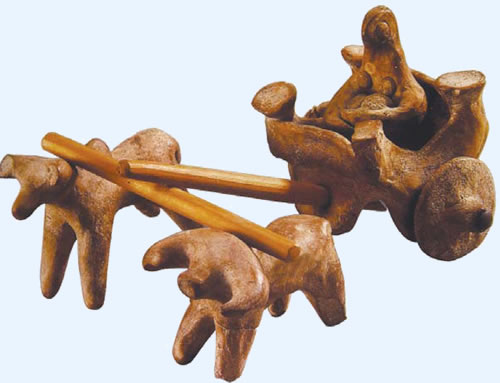
Indus Valley cities lived by trade. Farmers brought food into the cities. City workers made such things as pots, beads and cotton cloth. Traders brought the materials workers needed, and took away finished goods to trade in other cities.Trade goods included terracotta pots, beads, gold and silver, coloured gem stones such as turquoise and lapis lazuli, metals, flints (for making stone tools), seashells and pearls. Minerals came from Iran and Afghanistan. Lead and copper came from India. Jade came from China and cedar tree wood was floated down the rivers from Kashmir and the Himalayas.Indus Valley traders crossed mountains and forests. They followed rivers walking along the river bank. They also used boats. In a boat, it was easier and quicker going downstream (the same direction as the river was flowing). Some traders carried goods on their backs. Others drove wooden carts pulled by Bullocks. Archaeologists  have found clay models of carts, which look like the bullock-carts still seen in India today.Traders probably journeyed in groups. At night they made camp, or slept in roadside hotels. Sometimes it was safer to travel in groups, for protection against robbers or hungry tigers.Some traders settled in other lands. Traders from another civilisation called Mesopotamia made their homes in Indus cities, and people from the Indus Valley went to live in cities in Mesopotamia.

Trade with Mesopotamia:

Sargon of Akkad (2334 to 2279 BC) was a king in Mesopotamia. This was one of the first ancient civilisations. We know Indus Valley traders went there, because Indus seals have been found in Mesopotamia. Sargon's scribes kept written records of ships from other lands. So we learn that the Mesopotamians bought gold, copper and jewellery from 'Meluhha'. Was Meluhha the Mesopotamian name for the Indus civilisation? Or was it the Indus Valley people's own name for their land?.Most Probably. To reach Mesopotamia, Indus ships sailed west. They probably kept close to land. Bits of old Indus pottery found on beaches in Oman, in the Gulf, came from storage jars left behind by traders.


 Impact of Indus Art on Indian Art and Craft :

Interestingly, Indus art and craft has a deep effect on modern Indian art and crafts as well. In modern India the use of Collerium and other toiletry items are seen that were also prevalent in the Indus civilisation. The ability to create powerful symbols was something that could only be done by using special technologies and specific raw materials that were not easily accessible to the common people. The new elites and powerful merchants of the state controlled the crafts that became very significant in strengthening social and ritual status. From one generation to the next, through network of kins, the awareness of definite craft technologies were passed on. Faience working and seal carving are the crafts which were indisputably associated with the growth and integration of new social groups which used distinct types of artifacts to demarcate themselves and their ideologies, customs and tradition. There is a very preliminary but stimulating pattern in the predominant location of craft production on the southern half of the city mounds. Else the northern halves of mounds tend to have either private habitations or public buildings. While the Harappan culture has revealed excellence in sculpture and crafts, there are very few remains of paintings. Patterns on pottery are considered as rare exceptions. The pots had beautiful forms finished with a reddish glaze which were decorated with a diversity of geometric designs done in black.

It is said that the artists of the Indus Valley had a great feel for natural forms and could depict them with marvelous skill. It can well be understood from the power and energy of the bulls and the fierceness of the tigers on the seals. They could model or carve with enormous sensitivity. In the art of Indus Valley the appearance of yogic postures is very fascinating, and also the association of humans with trees. These are motifs which have evolved through centuries enriching the language of Indian art. Thus, Indus art and craft, display some of the most interesting characteristics of rich artistic heritage that existed ages back. These also have an influence on the modern art and craft. The excavated bits and pieces are a source of wide ranging information about their handicrafts, which is really attractive. Indus art and crafts speak a great deal about the civilisation that vanished without a trace.

Decline of the Indus Valley Civilization:

By about 1700 B.C., the Harappan culture was on the verge of decline. The causes of its decline are not certain. The physical existence of the civilization may have ended due to various factors.

 (a) Ecological changes - might have led to the decline of land and agriculture, thereby enforcing the need to evacuate to other area might have been the reason for the disintegration of the Indus valley. Shifts in the monsoon pattern and changes in temperature led to the area become even more arid. The decline in monsoon rains led to weakened river dynamics, and played a critical role both in the development and the collapse of the Harappan culture which was dependent on river floods to fuel their agricultural surplus.

(b) Increase in population, excessive deforestation, decline in agriculture etc. might have created economic problems leading to the gradual decay of the culture. The marked decline in the quality of building and town planning indicates that the authorities were losing control.

(c) The changes in the river flow patterns and correspondent widespread flooding would have disrupted the agricultural base.

(d) The invasion of the Aryans is the other view that is said to be another reason which might have also led to the decline of the Indus valley.


Thursday, December 29, 2011

Science’s Breakthrough of the Year (2011)


Antiretroviral Therapy (ART)


The journal Science has lauded an eye-opening HIV study, known as HPTN 052, as the most important scientific breakthrough of 2011. This clinical trial demonstrated that people infected with HIV are 96% less likely to transmit the virus to their partners if they take antiretroviral drugs (ARVs).The findings end a long-standing debate over whether ARVs could provide a double benefit by treating the virus in individual patients while simultaneously cutting transmission rates. It’s now clear that ARVs can provide treatment as well as prevention when it comes to HIV, researchers agree.


The Hayabusa Mission 

After some near-disastrous technical difficulties and a stunningly successful recovery, Japan’s Hayabusa spacecraft returned to Earth with dust from the surface of a large S-type asteroid. This asteroid dust represented the first direct sampling of a planetary body in 35 years, and analysis of the grains confirmed that the most common meteorites found on Earth, known as ordinary chondrules, are born from these much larger S-type asteroids.

Click --> Chondrites


Unraveling Human Origins 

Studying the genetic code of both ancient and modern human beings, researchers discovered that many humans still carry DNA variants inherited from archaic humans, such as the mysterious Denisovans in Asia and still-unidentified ancestors in Africa. One study this year revealed how archaic humans likely shaped our modern immune systems, and an analysis of Australopithecus sediba fossils from South Africa showed that the ancient hominin possessed both primitive and Homo-like traits.


Capturing a Photosynthetic Protein 

In vivid detail, researchers in Japan have mapped the structure of the Photosystem II, or PSII, protein that plants use to split water into hydrogen and oxygen atoms. The crystal-clear image shows off the protein’s catalytic core and reveals the specific orientation of atoms within. Now, scientists have access to this catalytic structure that is essential for life on Earth—one that may also hold the key to a powerful source of clean energy.

Pristine Gas in Space

Astronomers using the Keck telescope in Hawaii to probe the faraway
universe wound up discovering two clouds of hydrogen gas that seem to have maintained their original chemistry for two billion years after the Big Bang. Other researchers identified a star that is almost completely devoid of metals, just as the universe’s earliest stars must have been, but that formed much later. The discoveries show that pockets of matter persisted unscathed amid eons of cosmic violence.

Getting to Know the Microbiome

Research into the countless microbes that dwell in the human gut demonstrated that everyone has a dominant bacterium leading the gang in their digestive tract: Bacteroides, Prevotella, or Ruminococcus. Follow-up studies revealed that one of these bacteria thrives on a high-protein diet while another prefers vegetarian fare. These findings and more helped to clarify the interplay between diet and microbes in nutrition and disease.

A Promising Malaria Vaccine

Early results of the clinical trial of a malaria vaccine, known as RTS,S, provided a shot in the arm to malaria vaccine research. The ongoing trial, which has enrolled more than 15,000 children from seven African countries, reassured malaria researchers, who are used to bitter disappointment, that discovering a malaria vaccine remains possible.

Strange Solar Systems

This year, astronomers got their first good views of several distant planetary systems and discovered that things are pretty weird out there. First, NASA’s Kepler observatory helped identify a star system with planets orbiting in ways that today’s models cannot explain. Then, researchers discovered a gas giant caught in a rare “retrograde” orbit, a planet circling a binary star system, and 10 planets that seem to be freely floating in space—all unlike anything found in our own solar system.

Designer Zeolites

Zeolites are porous minerals that are used as catalysts and molecular sieves to convert oil into gasoline, purify water, filter air, and produce laundry detergents (to name a few uses). This year, chemists really showed off their creativity by designing a range of new zeolites that are cheaper, thinner, and better equipped to process large organic molecules.

more about zeolites

Clearing Senescent Cells

Experiments revealed that clearing senescent cells, or those that have stopped dividing, from the bodies of mice can delay the onset of age-related symptoms such as cataracts and muscle weakness. Mice whose bodies were cleared of these loitering cells didn’t live longer than their untreated cage-mates—but they did seem to live better, which provided researchers with some hope that banishing senescent cells might also prolong our golden years.

Monday, December 26, 2011

Stem Cells

Stem cell is a cell whose job in the body is not yet determined (they are unspecialized).Every single cell in the body stems from this type of cell.Hence the name stem cell.Stem cells have the remarkable potential to develop into many different cell types in the body during early life and growth. In addition, in many tissues they serve as a sort of internal repair system, dividing essentially without limit to replenish other cells as long as the person or animal is still alive. When a stem cell divides, each new cell has the potential either to remain a stem cell or become another type of cell with a more specialized function, such as a muscle cell, a red blood cell, or a brain cell.

Self - renewal (ability to go through numerous cycles of cell division while maintaining undifferentiated state) and Potency (capacity to differentiate into specialized cell types)  are the unique properties of stem cells.


why are they important?

Stem cells are important for living organisms for many reasons. In the 3- to 5-day-old embryo, called a blastocyst, the inner cells give rise to the entire body of the organism, including all of the many specialized cell types and organs such as the heart, lung, skin, sperm, eggs and other tissues. In some adult tissues, such as bone marrow, muscle, and brain, discrete populations of adult stem cells generate replacements for cells that are lost through normal wear and tear, injury, or disease.

Given their unique regenerative abilities, stem cells esp. embryonic stem cells could be used to replace any part of the body damaged by accident or illness. It could lead to cures for such recalcitrant diseases as Parkinson's, Alzheimer's and diabetes. Some scientists believe the cells might eventually allow those who are paralyzed to walk again.  However, much work remains to be done in the laboratory and the clinic to understand how to use these cells for cell-based therapies to treat disease, which is also referred to as regenerative or reparative medicine.


Two broad types of mammalian stem cells are :

1.Embryonic stem cells
2.Adult stem cells

Embryonic stem cells are derived from embryos that develop from eggs that have been fertilized in vitro.Adult stem cells are undifferentiated cells, found throughout the body after embryonic development, that multiply by cell division to replenish dying cells and regenerate damaged tissues. Adult stem cells are also  known as somatic stem cells.


Similarities and differences between Embryonic and Adult stem cells


Human embryonic and adult stem cells each have advantages and disadvantages regarding potential use for cell-based regenerative therapies. Of course, adult and embryonic stem cells differ in the number and type of differentiated cells types they can become. Embryonic stem cells can become all cell types of the body because they are pluripotent. Adult stem cells are generally limited to differentiating into different cell types of their tissue of origin(multipotent stem cells). However, some evidence suggests that adult stem cell plasticity may exist, increasing the number of cell types a given adult stem cell can become.

Large numbers of embryonic stem cells can be relatively easily grown in culture, while adult stem cells are rare in mature tissues and methods for expanding their numbers in cell culture have not yet been worked out. This is an important distinction, as large numbers of cells are needed for stem cell replacement therapies.

A potential advantage of using stem cells from an adult is that the patient's own cells could be expanded in culture and then reintroduced into the patient. The use of the patient's own adult stem cells would mean that the cells would not be rejected by the immune system. This represents a significant advantage as immune rejection is a difficult problem that can only be circumvented with immunosuppressive drugs.

Embryonic stem cells from a donor introduced into a patient could cause transplant rejection. However, whether the recipient would reject donor embryonic stem cells has not been determined in human experiments.

The unique potential contribution of human embryonic stem cells to therapies is a product of both their longevity and their capacity to produce a wide range of specialised cells in the laboratory. By contrast, adult stem cells that are grown in the laboratory appear to have much shorter lifespans than embryonic stem cells. This reduces their capacity to form new cell types. Stem cells can also be obtained from aborted fetuses and umbilical cord blood, but it is not clear whether the full range of cell types that are required for treatments could eventually be generated from these sources alone.


Stem cell controversy

The stem cell controversy is the ethical debate primarily concerning the creation, treatment, and destruction of human embryos incident to research involving embryonic stem cells. The status of the human embryo and human embryonic stem cell research is a controversial issue as, with the present state of technology, the creation of a human embryonic stem cell line requires the destruction of a human embryo. Stem cell debates have motivated and reinvigorated the pro-life movement, whose members are concerned with the rights and status of the embryo as an early-aged human life.They believe that embryonic stem cell research instrumentalizes and violates the sanctity of life and is tantamount to murder.The fundamental assertion of those who oppose embryonic stem cell research is the belief that human life is inviolable, combined with the belief that human life begins when a sperm cell fertilizes an egg cell to form a single cell.Crucial to the argument is the issue of whether the embryo/foetus  is a “person”. The unborn child is not legally classified as a person, various courts also noted then that if the “personhood” of the preborn is established, then the case for the right to abortion collapses, because the foetus's right to life is then guaranteed by the constitutions.


Stem cell research in India 


Stem Cell research in India is still in its infancy.Rules in India say embryos should not be generated for the sole purpose of obtaining stem cells. Only surplus or spare embryos can be used after obtaining informed consent of both spouses. Such collection of embryos should be done only from registered Assisted Reproductive Technique (ART) clinics.Though India is seen as a potential bio-tech powerhouse, lack of regulation has made stem cell research disorganized and unsafe. Now germ line that deals with research with genetic material like ova and sperm that is passed from parents to children would not be allowed. The ethical issue is the contention that this research, which seeks to identify genetic qualities, can be used to manipulate or change the gene. Similarly, genetic engineering and transfer of human blastocysts - a hollow ball of 100 cells reached after five days of embryonic development - into a human or non-human uterus will be illegal.Research or therapy using fetal stem cells/placenta is allowed. But, pregnancy termination cannot be sought for donating fetal tissue for possible financial or therapeutic benefits.

India has put in place the National Apex Committee for Stem Cell Research and Therapy (NAC-SCRT). This 12-member committee "reviews all controversial and ethically sensitive stem cell research proposals" and "oversee, monitor and make policies on stem cell use in India".

NAC-SCRT examines the scientific, technical, ethical, legal and social issues, involving each and every human embryonic stem cell research. All institutions and investigators carrying out research on human stem cells will have to be registered with NAC-SCRT through an Institutional Committee for Stem Cell Research and Therapy (IC-SCRT).

All research studies and clinical trials will have to have prior approval of IC-SCRT for permissive research and of NAC- SCRT for restricted research. All new stem lines will be created and all established cell lines from any source, imported or created in India will also have to be registered with IC - SCRT and NAC- SCRT.


Sunday, December 25, 2011

The Doha Round


The Doha Round is the latest round of trade negotiations among the WTO membership. Its aim is to achieve major reform of the international trading system through the introduction of lower trade barriers and revised trade rules in order to expand global economic growth, development, and opportunity.The Round was launched in Doha, Qatar, in November 2001, at the WTO’s Fourth WTO Ministerial Conference

As of 2008, talks have stalled over a divide on major issues, such as agriculture, industrial tariffs and non-tariff barriers, services, and trade remedies.The most significant differences are between developed nations led by the European Union (EU), the United States (USA), and Japan and the major developing countries led and represented mainly by Brazil, China, India, South Korea, and South Africa. There is also considerable contention against and between the EU and the USA over their maintenance of agricultural subsidies—seen to operate effectively as trade barriers.

The negotiations focus on the following areas:


Agriculture


Industrial goods market access


Services


Trade facilitation


WTO rules (i.e., trade remedies, fish subsidies, and regional trade agreements)


Development


Issues


Agriculture

Agriculture has become the most important and controversial issue. Agriculture is particularly important for developing countries, because around 75% of the population in developing countries live in rural areas, and the vast majority are dependent on agriculture for their livelihoods. The first proposal in Qatar, in 2001, called for the end agreement to commit to substantial improvements in market access; reductions (and ultimate elimination) of all forms of export subsidies; and substantial reductions in trade-distorting support.
The dispute over agriculture hinges on the active role the United States and the EU take to support their agricultural sectors with subsidies and tariffs. Last fall, the United States offered to cut its agricultural subsidies by an average of more than 50 percent, but conditioned the offer on major market-access proposals from the EU and G-20 states. The EU has offered to cut its tariffs by an average of 40 percent, but it also wants to identify up to 160 of its agricultural products as “sensitive” and preserve tariff protections for them. The Economist says 17 and 54 are the two “magic numbers” to meet if renewed talks this spring are to succeed: the U.S. will need to limit its farm subsidies to $17 billion (its lowest offer thus far is $22 billion), and EU countries must make cuts in their agricultural tariffs in the vicinity of 54 percent. The EU and United States are calling on developing nations like India and Brazil to improve their offer to open up their markets to industrial goods. But an open embrace from the developing world is highly unlikely if the United States refuses to give up its significant farm subsidies.

Access to patented medicines

A major topic at the Doha ministerial regarded the WTO Agreement on Trade-Related Aspects of Intellectual Property Rights (TRIPS). The issue involves the balance of interests between the pharmaceutical companies in developed countries that held patents on medicines and the public health needs in developing countries. Before the Doha meeting, the United States claimed that the current language in TRIPS was flexible enough to address health emergencies, but other countries insisted on new language.

Special and differential treatment

The WTO Agreements contain special provisions which give developing countries special rights and which give developed countries the possibility to treat developing countries more favorably than other WTO Members. 
The special provisions include:
  • longer time periods for implementing Agreements and commitments,
  • measures to increase trading opportunities for these countries,
  • provisions requiring all WTO members to safeguard the trade interests of developing countries,
  • support to help developing countries build the infrastructure for WTO work, handle disputes, and implement technical standards, and
  • provisions related to Least-Developed country (LDC) Members.

The negotiations have been split along a developing-country/developed-country divide. Developing countries wanted to negotiate on changes to S&D provisions, keep proposals together in the Committee on Trade and Development, and set shorter deadlines. Developed countries wanted to study S&D provisions, send some proposals to negotiating groups, and leave deadlines open. Developing countries claimed that the developed countries were not negotiating in good faith, while developed countries argued that the developing countries were unreasonable in their proposals. 


Implementation issues

Developing countries claim that they have had problems with the implementation of the agreements reached in the earlier Uruguay Round because of limited capacity or lack of technical assistance. They also claim that they have not realized certain benefits that they expected from the Round, such as increased access for their textiles and apparel in developed-country markets.


Why is the Doha Round of Trade Talks So Important?

 The Doha round of trade talks would have reduced subsidies for developed countries’ agricultural industries, thus allowing developing countries to export a product that they are already good at producing - food. In return, the developing countries would open up their market to services, particularly banking, which would provide new markets to the developed countries service industries(developed countries want to increase their access to non-agricultural manufacturing and service sectors in robust developing countries like China, India, and Brazil.), and help modernize these markets for the developing countries. But the agribusiness lobbies in the U.S. and Europe put political pressure on their legislatures, and effectively ended this round of negotiations. The result has been an increase of bilateral agreements.

What happens if Doha fails?

It can pose problems to businesses worried about a “spaghetti bowl” [when multiple bilateral agreements overlap, causing complex and un-integrated regulatory requirements].Some people opine that the Doha round's failure would be a setback to global poverty-reduction efforts such as the UN Millennium Development goals.


Saturday, December 24, 2011

What is the Higgs boson?


 The Higgs Boson is a hypothetical massive elementary particle that is predicted to exist by the Standard Model (SM) of particle physics, the Higgs boson is crucial to understanding the origin of mass. Shortly after the big bang, it is thought that many particles had no mass, but became heavy later on thanks to the Higgs field. Any particles that interact with this field are given mass. The Higgs boson is the signature particle of the field. Its existence is postulated as a means of resolving inconsistencies in the Standard Model. Experiments attempting to find the particle are currently being performed using the Large Hadron Collider (LHC) at CERN.


What exactly is the Higgs field?

A theoretical, invisible energy field that stretches throughout the universe. It clings to fundamental particles wherever they are, dragging on them and making them heavy. Some particles find the field more "sticky" than others. Particles of light – photons – are oblivious to it. Other particles have to wade through it like an elephant in tar. So, in theory, particles can weigh nothing, but as soon as the field switched on shortly after the big bang, they got their mass.

Why do people call it the 'god particle'?

Its theistic nickname was coined by Nobel prizewinning physicist Leon Lederman, but Higgs himself is no fan of the label. "I find it embarrassing because, though I'm not a believer myself, I think it is the kind of misuse of terminology which I think might offend some people."According to Higgs, it wasn't even Lederman's choice to call it the god particle: "He wanted to refer to it as that 'goddamn particle' and his editor wouldn't let him."


What would finding the Higgs boson mean for physics?

It would vindicate the so-called Standard Model of physics which envisages that the universe is made from 12 basic building blocks called fundamental particles and governed by four fundamental forces. The existence of the Higgs boson is predicted by the Standard Model but it has yet to be found by experiments.

How was the data collected?

The data comes from smashing protons together at very high energy in the Large Hadron Collider at the European particle laboratory, CERN. The collisions recreate conditions that have not existed in the universe since just after the big bang. The LHC will generate, in a microscopic region where beams of particles collide, a concentration of energy that has never been achieved before – a concentration that mimics, in microcosm, the conditions that prevailed in the universe during the first trillionth of a second after the big bang.After each impact, giant detectors scour the subatomic wreckage looking for evidence of new physics.


Wednesday, December 21, 2011

Economic census


Economic census is the complete count of all entrepreneurial units located within the geographical boundaries of the country, involved in any economic activities of either agricultural (excluding crop production and plantation) or non-agricultural sector of the Economy, engaged in production and/or distribution of goods and/or services not for the sole purpose of own consumption.

The objective of the conduct of Economic Census is to provide basic information viz.number of enterprises, employment therein, number of enterprises by type of activity, by type of ownership and by type of social group for planning purposes and to provide a frame for follow-up surveys which are meant for collecting detailed information about the enterprise.

Reliable and timely database is the basic necessity for any sound and systematic planning. The efficient formulation, implementation and evaluation of any sectoral Planning Scheme depend on reliable data base, preferably defined at lower level. Lack of adequate data on the characteristics and performance of virtually entire sectors of trade and construction and the un-organised segments of other sectors had been a very serious handicap in developmental planning and estimation of National / State Income. Though a fairly adequate system of agricultural statistics has already been developed in the country but such an information system has not yet been built up for the non-agricultural sector. While statistics in respect of organized segments of the non-agricultural economy are being collected more or less regularly. It is not so in regard to its unorganized sector, although this sector assumes greater importance due to its significant contribution towards gross domestic product as also in generation of employment in developing economy. To bridge the gap by providing basic data on non-agricultural sector and also providing frame for the follow up survey on different section of the economy, a scheme of Economic Census and Surveys was launched by Central Statistical Organization, Government of India in the year 1976. Since then, the Central Statistical Organization has conducted five Economic Census in the year 1977, 1980, 1990 1998 and 2005.(Forthcoming Sixth Economics Census-2012)


The first coordinated approach to fill these vital data gaps was made by the Central Statistical Organisation (CSO), Government of India by launching a plan scheme 'Economic Census and Surveys' in 1976. The scheme envisaged organising countrywide census of all economic activities (excluding those engaged in crop production and plantation) followed by detailed sample surveys of unorganised segments of different sectors on non-agricultural economy in a phased manner during the intervening period of two successive economic censuses. The basic purpose of conducting the economic census was to prepare a frame while follow up surveys intended to collect more detailed sector specific information between two economic censuses. In view of the rapid changes that occur in the unorganised sectors of non-agricultural economy due to high mobility or morbidity of smaller units and also on account of births of new units, the scheme envisaged conducting the economic census periodically in order to update the frame from time to time.

(Contents of Economic census includes - location of the enterprise,description of economic activity,nature of operation,type of ownership,social group of the owner,power/fuel used for the economic activity,total number of persons working and dependents)

Sixth Economics Census:

The Sixth Economic Census is to be conducted in 2012.To conduct successful six economic census activity wise proposed plan are as follows:-

1. The field survey of the Sixth Economic Census would be conducted during the period of21May- 20June, 2011.

2. A steering committee under the chairmanship of chief secretary of the state has been constituted comprising related department's principal secretaries/ secretaries as a member and DES as member secretary of the committee.

3. District level monitoring committee at district level has also been constituted under the chairmanship of district collector. Other district level officers are nominated as a member and district statistical officer as member secretary of the committee.

  The Central Government plans to conduct the Sixth Economic Census as a Central Sector Plan Scheme during 2012. It will spend Rs 800 crore for the Sixth Economic Census.